
In nature, cells self-organize. They collaborate without a top-down master plan. They sense their environment, adapt, differentiate, and co-create complex life forms. There is no CEO cell, no central authority deciding which cell becomes bone, blood, or synapse. Order emerges from interaction.
Self-organization refers to: “the emergence of order in time and space of a given system that results from the collective interactions of its individual members.”
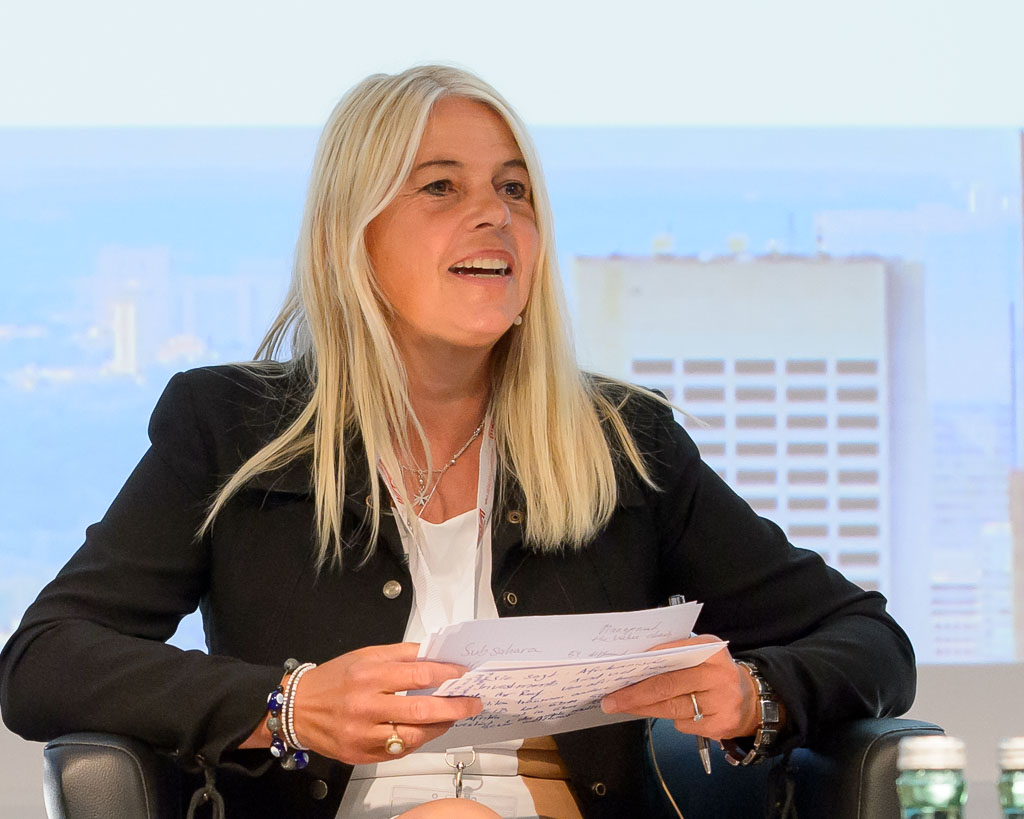
Dr. Karen Wendt sees this same potential in finance and in companies themselves.
After decades in project finance, infrastructure investment, and M&A, she recognized a pattern that represented a critical missed opportunity. In every transaction, a price was determined for a company or an asset based on earnings, contracts, and balance sheets. But the consequences for people, ecosystems, and future generations remained invisible in the calculation.
This was a missed opportunity because these hidden risk factors could be transformed into innovation, better models, higher profits, and lower risk. Valuation in private markets is inherently tricky with no market value, a company’s worth can differ significantly according to the valuation method chosen. But one thing is certain: hidden risks compound if left unexamined. The price was determined, the deal closed, and the externalities continued to accumulate unseen.
“In project and infrastructure finance, and later in M&A, I saw a repeating pattern: a price was determined for a company or an asset, and that moment of valuation could and should have been a moment of re-evaluation,” she reflects. “Not just pricing earnings, assets, and contracts, but pricing consequences for people, for society, for ecosystems, for future generations.”
Just like cells self-organize in nature, companies, investment partnerships, and women-led capital networks can also self-organize to create order, resilience, and regeneration over time. This is not metaphor. It is methodology grounded in understanding companies as living systems, not just hierarchies.
Her work stands at the intersection of biological principles, financial innovation, and social transformation. Through SwissFinTechLadies and her academic leadership in sustainable finance, she is architecting what she calls regenerative finance: investment structures that are autonomous and co-creative rather than purely top-down, purpose-driven rather than profit-only, evolutionary and learning-based, emotionally agile to reflect human reality, and anti-fragile able to become stronger under stress.
FROM PRICING TO RE-EVALUATION: THE MOMENT THAT CHANGED EVERYTHING
The challenge of our century, as Karen identifies it, is that we need investment structures capable of handling complexity while remaining adaptive, emotionally intelligent, and strengthening under pressure rather than merely surviving it.
This realization catalyzed what would become her pioneering work in extra-financial risk management. As an intrapreneur within investment banking, she wrote the business plan, took it to the highest levels of the institution, inspired leadership, and transformed how the bank evaluated project and export finance. She was responsible for leadership transformation, change management, policies, and for identifying extra-financial risk in each and every deal with her team. It transformed project and export finance forever.
“It was a wild ride eine wilde Fahrt, as we say in German but it succeeded,” Karen recalls.
The initiative was a major infrastructure project that gathered stakeholders who had never shared a negotiation table: scientists, engineers, regulators, financiers, and affected communities. Together, they shifted deal structures to include ecosystem benefits and social outcomes in valuation models. They transformed hidden risks into innovation opportunities, better models, higher profits, and lower risk.
They didn’t just finance a project. They financed a future scenario one grounded in long-term prosperity, not short-term extraction.
This became the blueprint for the Equator Principles, now a global standard in sustainable finance, and what Karen now calls Regenerative Finance. “I am proud to have been pioneering this development,” she says. “No one believed it was possible. I dared to do it. The best way to predict the future is to create it.”
THE SEVEN CAPITALS: EXPANDING THE DEFINITION OF VALUE
Karen’s framework for regenerative finance rests on what she calls the Seven Capital Model, which recognizes value far beyond financial returns: natural capital, human capital, social capital, cultural capital, intellectual capital, manufactured capital, and financial capital.
This multidimensional approach responds directly to the central challenge she has identified: we need investment structures that are autonomous and co-creative, purpose-driven, evolutionary, emotionally agile, and anti-fragile.
“When we invest using all seven forms of capital, we transition from profit-only thinking to People, Planet, Prosperity,” Karen explains. The model doesn’t reject financial return. It contextualizes it within a broader understanding of what creates sustainable value.
Her mission crystallizes around a specific transformation: women must become investors, not merely beneficiaries of investment. And they must be financially rewarded not only for profit but for societal impact. She predicts that impact assets will outperform profit-only markets, earning what she terms an impact premium.
“The future of capital is self-organized, decentralized and impact-generative,” Karen asserts. This future is already taking shape through the work of SwissFinTechLadies.
BUILDING SELF-ORGANIZED INVESTMENT ECOSYSTEMS
Finance, at the beginning of the 21st century, is reaching a threshold. Many organizations are coming to the limit of how they have worked and structured themselves so far. Hierarchy, short-term profit, and linear value chains are proving insufficient for a world defined by complexity, uncertainty, and interdependence.
Women are not waiting to be admitted to existing investment committees. They are forming their own. Like biological systems responding to environmental pressures, women’s investment networks are self-organizing into adaptive, intelligent capital ecosystems.
“Women intuitively understand nature’s logic because we are biologically, historically, and socially connected to life cycles, regeneration, and collective intelligence,” Karen observes. This intuitive understanding becomes strategic advantage when channeled through proper structures and education.
SwissFinTechLadies operates as an enabling platform rather than a gatekeeper. The organization empowers women to become investors rather than remaining founders seeking capital or donors giving it away. It facilitates curated access to professional investors and shares deal flow through awareness-raising. It helps female entrepreneurs develop investment readiness and capital fluency. It educates both Generation Z and women preparing for the great wealth transfer that will see trillions move from older to younger generations over the coming decades.
Perhaps most significantly, SwissFinTechLadies hosts self-organized investor circles and investment clubs, capped at twenty people, where women who fulfill professional investor requirements can co-invest together. They train women to become angel investors. The goal is clear: women investing in women, creating closed loops of capital and capability that strengthen both sides of every transaction.
“We build ecosystems where technology is an enabler, not a gatekeeper,” Karen emphasizes. This distinction matters enormously in an era where technological complexity often serves to exclude rather than include.
SCIENCE AS INVESTMENT INFRASTRUCTURE
Karen’s investment philosophy is grounded in scientific rigor. Every opportunity highlighted to the network of professional investors at SwissFinTechLadies all female, by the way—emerges from deep scientific foundations: ETH or EPFL spin-offs, international university labs, or research centers like Mayo Clinic.
“I read scientific papers myself,” Karen says. “If something goes beyond my understanding, I ask an expert. Investors grow wiser when they learn science rather than fear it. Evidence-based investing is not only safer; it is smarter, more fun, and more future-fit.”
This approach has led her to support companies that exemplify both scientific excellence and impact philosophy. One Zurich-based AI platform uses machine learning and deep learning to create alpha more consistently than passive ETF strategies. What inspires Karen about this venture is not just the technology, but the humility, scientific rigor, and teamwork behind it. The platform democratizes wealth management individuals with smaller portfolios who typically lack access to sophisticated wealth managers can now access advanced investment strategies instead of going to their bank.
Another company she follows closely is revolutionizing medical skin regeneration by creating bio-engineered skin by the meter for burn victims. This innovation eliminates the trauma of harvesting skin from other parts of the body, sets new standards of healing, and restores dignity. “This is health as impact,” Karen notes.
These companies share a critical characteristic: they are anti-fragile, meaning they are hugely profitable, grow stronger through challenge, and remain deeply meaningful to humanity. For Karen, sustainability always includes financial sustainability. Without profits, there is no sustainability.
FAMILY OFFICES AND THE LEGACY QUESTION
Karen has particular insight into the evolving role of family offices. “Family offices are created for eternity,” she explains. “They are not Florence Nightingale or Mother Teresa but they want to exist in eternity and they want to create a legacy for the future generations to come.”
Legacy, in her view, comes from bringing personal values to the investment table. Many elder generation wealth holders maintain a strict separation: I invest for profit and I do good through a foundation. Younger generations want these approaches integrated through impact investing.
Family offices enjoy a structural advantage in this transition. Since they do not have fiduciary duties like many institutional investors for instance, pension funds they can invest into impact more easily. However, internal value divergence can occur within families as generations clash over investment philosophy. In such cases, external facilitation becomes necessary to align the family behind shared values.
“This is why we love to work with family offices,” Karen explains. “They have value investing already in their DNA.” The questions family offices should ask, in her framework, are: What is the investor impact we create? How can capital give life to projects that would never exist without us? And what is the asset impact how huge is the impact of our investment for society?
FROM CLASSROOM TO BOARDROOM: SHAPING FUTURE MINDSETS
Karen’s influence extends beyond direct investment activity into the formation of future leaders through the Sustainable Finance Book Series. This editorial work shapes the mindset of future generations, in particular Generation Z and Generation Alpha, and therefore also future investors, company members, leaders, and policymakers.
At SwissFinTechLadies, real-world innovation, science-driven cases, and research are integrated into investment theses, investment policies, and educational programs from classrooms to boardrooms to investment decision makers.
“Knowledge becomes investment infrastructure,” Karen observes. In her framework, ROE no longer means only Return on Equity. It means Return on Existence.
EFFECTIVENESS OVER EFFICIENCY: THE INNOVATION IMPERATIVE
When asked about her core message to leaders regarding innovation, Karen’s response is characteristically direct: “Dare to innovate. The best way to predict the future is to create it.”
But innovation, in her view, must be values-driven, regenerative, and dignity-enhancing. She distinguishes sharply between efficiency and effectiveness. “Effectiveness means you apply the right tools in the right context. Sometimes some tools are worn out, so you need to sit back, reflect, and do what a machine has to do as well: create a better and better model all the time.”
She points to Apple’s CEO Steve Jobs as an exemplar of effectiveness. “He saw a gap where no one else was, and he was daring enough to close it.” This courage to identify and fill voids that others cannot yet perceive defines true innovation leadership.
WOMEN AND THE GREAT WEALTH TRANSFER
The transfer of wealth from Baby Boomers to younger generations represents one of the most significant capital redistributions in history. Karen sees this as a pivotal moment for women to become vanguards of wealth rather than passive inheritors.
Her strategic guidance for women centers on transformation from consumer to investor. Women currently are responsible for approximately eighty percent of all consumption worldwide. Karen challenges this pattern: “Learn resourcefulness instead of being responsible for 80 percent of all consumption worldwide only. Discover the investor within themselves behind the consumer.”
Her recommendations are specific. Women must learn investment fluency, not just literacy—or join SwissFinTechLadies, where they educate, instigate, and help women integrate and apply their knowledge. They should make conscious choices rather than simply copying the testator’s strategy. They should invest not only for stability but for resilience and anti-fragility. And they must recognize that sustainability always includes financial sustainability. Without profits, there is no sustainability.
“Do not inherit passively,” Karen urges. The wealth transfer is not simply about receiving assets. It is about reimagining what those assets can become in service of a different future.
DECENTRALIZED SYSTEMS AND THE FUTURE OF BANKING
Karen’s perspective on blockchain and decentralized systems is pragmatic rather than utopian. She notes that Telegram and Facebook can already function like banks in certain respects. Yet the core function of banking transforming individual insecurity into measurable risk, eliminating uncertainty from the VUCA equation (volatility, uncertainty, complexity, ambiguity) remains essential. “This is the whole reason of being for banks and to finance the economy.”
She anticipates several developments emerging alongside traditional banking: transparent impact measurement, decentralized investment communities, nature-backed digital assets, and new digital trust architectures. These innovations will coexist with what she calls “the banking dinosaur” rather than replacing it entirely.
The future financial system, in her vision, will be hybrid: centralized institutions providing stability and risk transformation alongside decentralized networks enabling participation, transparency, and values-aligned capital formation.
ASKING THE ESSENTIAL QUESTIONS
Karen’s work ultimately invites two questions that she believes every investor, every leader, every human being allocating resources must confront with intention:
What world are we financing?
And who are we becoming as we invest in it?
These questions reframe finance not as a system of capital control, but as a living ecosystem of value where impact, innovation, decentralized investment, and shared prosperity evolve together. They transform investment from technical execution into existential choice.
Her career demonstrates that transformation begins not with waiting for permission but with daring to create the future that seems impossible. From introducing extra-financial risk management when it seemed radical, to building women-led investment networks when they didn’t exist, to grounding investment philosophy in biological principles of self-organization, Karen has consistently operated at the edges where existing systems meet emerging possibilities.
THE ARCHITECTURE OF TOMORROW
As finance reaches what Karen identifies as a threshold moment where many organizations are coming to the limit of how they have worked and structured themselves so far the choice becomes clear. Hierarchy, short-term profit, and linear value chains are proving insufficient for a world defined by complexity, uncertainty, and interdependence.
The alternative is not chaos. It is self-organization. It is the recognition that order can emerge from interaction, that purpose can guide without commanding, that capital can flow toward regeneration rather than extraction, and that companies themselves are living systems capable of adaptive intelligence.
Dr. Karen Wendt’s vision offers not prediction but invitation. The cells that form our bodies do not wait for instruction. They sense, they respond, they differentiate, they collaborate. They self-organize to create order in time and space through the collective interactions of individual members. They create the conditions for life to flourish.
Finance can do the same. Companies can operate as living systems. Women can lead the way. The capital is here. The knowledge is accessible. The networks are forming.
The question is no longer whether this transformation is possible. The question is who will dare to create it.