
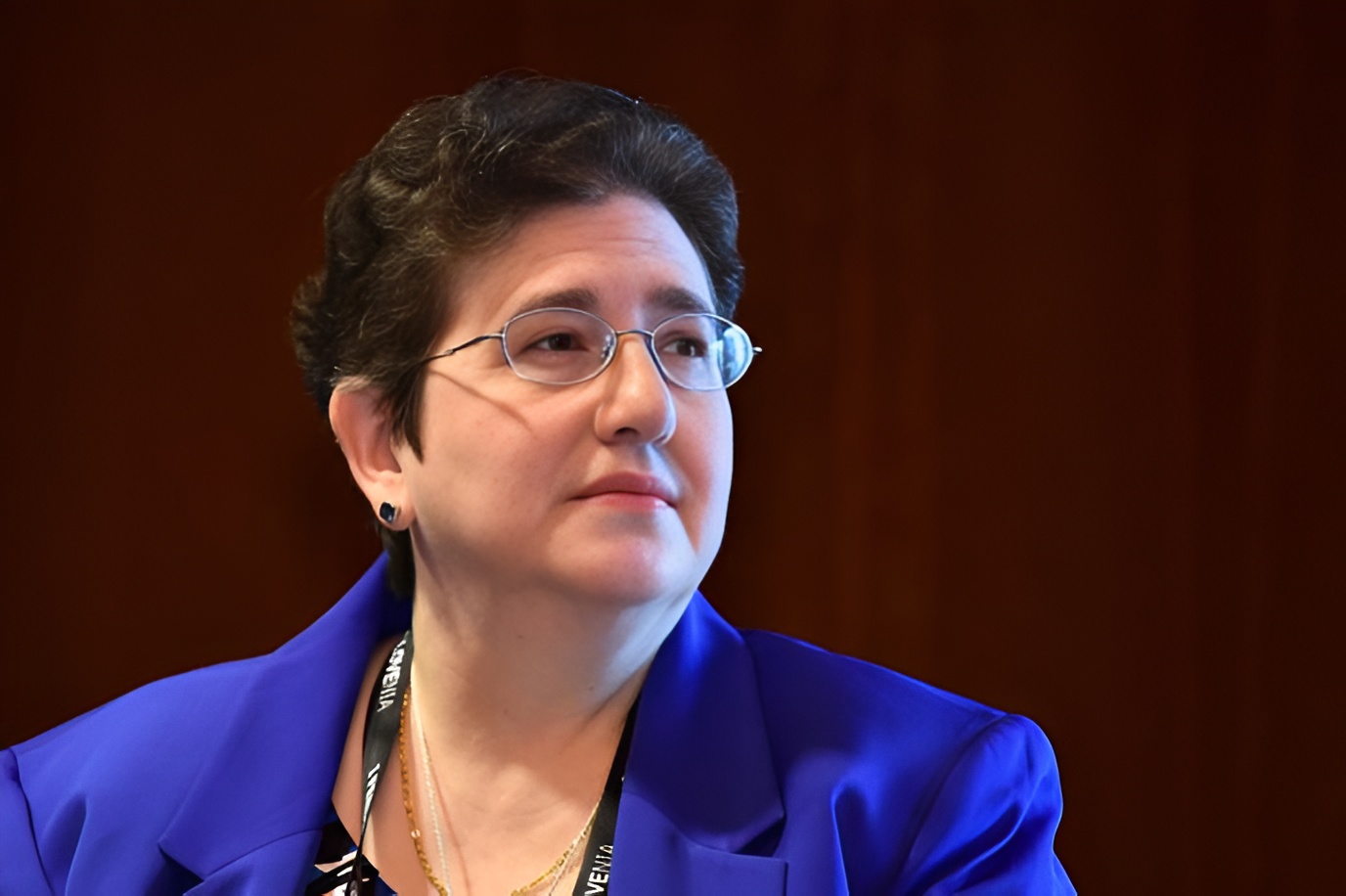
There are lives that are quietly extraordinary, less defined by a single transformative moment, yet shaped by decades of listening, crossing borders, and believing that knowledge, when shared with compassion, can shift the course of history. Dr. Colette Mazzucelli is one such life. A scholar-practitioner who studied French and German cultures in Fribourg and Strasbourg, a Fulbright alumna who worked inside the corridors of the European Commission in Brussels and the Federal Foreign Office in Bonn, and a Brooklyn girl who grew up hearing a dozen languages in one neighborhood, she carries within her the essential conviction that the world’s wounds can be healed through education, dialogue, and an unflinching moral imagination.
Her career has spanned academia, publishing, civil society, and grassroots peacebuilding. Today, as Founder, LEAD IMPACT Reconciliation Institute, Series Editor, Anthem Press, and a recognized force in global education, Dr. Mazzucelli continues to build the types of bridges that diplomats and governments too often fail to construct. In this exclusive conversation, she speaks with rare candor about ethical leadership, the courage of Gen Z women, the responsibilities of intellectuals, and the enduring power of simply listening.
— WHERE EDUCATION MEETS CONSCIENCE —
On Ethical Leadership in a Fractured World
Your career spans academia, publishing, civil society, and grassroots initiatives. How do you personally define ethical leadership in today’s fractured global landscape?
For Dr. Mazzucelli, ethical leadership is not a title or a platform. It is a commitment to what scholar-practitioner John Burton defined as “provention”: the anticipation of human needs before conflict consumes them. In an age where identity has become the fault line along which societies crack, she sees the educator’s role as deeply prophetic.
“As an educator, my concerns focus on anticipating the ways in which learning, research, and service are evolving,” she says. “There is a responsibility in academia to serve in a specific context as intergenerational needs are transformed by Artificial Intelligence.” That responsibility, she believes, is inseparable from a deep knowledge of history. Her archival research at Princeton’s Seeley G. Mudd Manuscript Library, tracing the Collected Papers of diplomat and historian George F. Kennan, exemplifies how the past illuminates the present.
On Education as a Catalyst for Global Responsibility
How can education move beyond knowledge transfer to become a catalyst for ethical action and global responsibility?
The answer, for Dr. Mazzucelli was not initially found in a classroom. The neighborhoods of two remarkable European cities—Fribourg, where French and German cultures co-exist, and Strasbourg, a city traded between empires—provided the locales for her to encounter reconciliation as a lived reality rather than a theory.
Those experiences ignited a lifelong fascination with the postwar rapprochement between France and Germany, two nations that had fought three wars in less than a century and yet chose to build peace together. That miracle of transformation became the cornerstone of her book, France and Germany at Maastricht, which traces the negotiations that created the European Union. “In my teaching, it is possible to reference themes in this book to connect theory and practice in ways that resonate with graduate candidates who go on to make a difference in government, international organizations, and non-governmental institutions.”
“Reconciliation between nations that fought three wars in less than a hundred years became my catalyst for reflecting on the global responsibility each human being carries in this century.”
On Building Trust in Divided and Post-Conflict Contexts
As Founder of LEAD IMPACT Reconciliation Institute, what lessons have you learned about building trust and dialogue in deeply divided or post-conflict contexts?
Trust, Dr. Mazzucelli has learned, is not built through policy papers or institutional frameworks alone. It is nurtured through relationship: through the patient cultivation of respect for the cultures and traditions of communities shaped by internal conflict.
LEAD IMPACT’s work is rooted in a transformational approach to development, forged through collaborative relationships with colleagues in the diasporas of fragile regions. Central to this vision is the legacy of the late Dr. Betty Reardon of Teachers College Columbia University, whose pioneering work at the intersection of human rights, gender, ecology, and peace education continues to shape the organization’s philosophy. “The gender dimension is particularly relevant in today’s world,” Dr. Mazzucelli notes, “as the majority of those who suffer in conflict areas are women and girls.”
On Listening and the Moral Imagination
In what ways do listening and moral imagination contribute to resolving global conflicts?
If there is one theme that weaves through every chapter of Dr. Mazzucelli’s career, it is the transformative power of listening. Inspired by the late Maxine Greene’s concept of “releasing the imagination,” she understands active listening not as passive reception: listening is a dynamic act of empathy, which makes it possible to inhabit another’s reality and, from that inhabited space, to imagine new possibilities.
“The interconnectedness we experience in listening to each other deepens a holistic awareness of our various identities—personal, local, national, and as world citizens,” she reflects. In the aftermath of the COVID-19 pandemic, nurturing that empathy has become urgent. The moral imagination, she insists, is not a luxury. It is the capacity that allows us to anticipate the concerns of the future and act upon them before crisis strikes.
— DIPLOMACY IS TOO IMPORTANT TO LEAVE TO GOVERNMENTS ALONE —
On Ethical Leadership When Systems Fail
The Afghanistan Initiative under LEAD IMPACT highlighted education under extreme conditions. What does ethical leadership look like when systems fail and risks are high?
The seeds of Dr. Mazzucelli’s understanding of leadership under pressure were planted decades ago at The Fletcher School of Law and Diplomacy, where the ritual of morning coffee in Pound Dining Hall among a gathering of students, faculty, and administrators modeled the communitarian spirit she would carry into the world’s most challenging environments.
“No classes were scheduled in that period because the dialogue in Pound was integral to our education,” she recalls warmly. That habit of coming together, of prioritizing human connection over institutional efficiency, gave her an innate understanding of the risks educators face in conflict zones. Ethical leadership, she concludes, must connect diplomacy and learning in such a way that the word ‘foreign’ never captures the essence of daily encounters in the most challenging environments.
On Scholarship, Misinformation, and Public Discourse
As Series Editor at Anthem Press, how do you see scholarship shaping public discourse on ethics, technology, and global governance—especially in an era of misinformation?
Twenty years ago, Dr. Mazzucelli wrote in the United Nations Chronicle of “freedom from exclusion” as a human right. That vision feels more urgent than ever in a world fractured by the politics of fear, the backlash against globalization, and the relentless construction of the “Other.”
Growing up in Brooklyn, a world unto itself, populated by families from Greece, Ireland, Denmark, Hungary, Albania, and dozens of other nations, she absorbed a lived truth that misinformation seeks to erase: that difference is not a threat. It is the source of community. “Scholarship that inspires pioneering inquiries made deep inside countries fearful of small numbers can shape public discourse through technology-mediated initiatives across continents,” she argues, “and also inspire conversations in local settings.”
“Our heart is a mirror in which we see a reflection of the world. Authenticity is nourished by opening our minds, hearts, and souls to discoveries that lifelong learning through active listening makes possible.”
On Recognition and the Responsibility It Carries
How do awards and recognition influence responsibility rather than ego in leadership?
When asked about recognition, Dr. Mazzucelli reaches for a memory, not a trophy: a room at Georgetown University’s School of Foreign Service where a mirror connects students in Washington, D.C. to their counterparts in Doha. It is a metaphor she returns to repeatedly: technology, less as spectacle, and more as a tool for creating inclusive community across geography and culture.
“Responsibility rather than ego inspires leadership that is inclusive in its orientation,” she says simply. “Spiritual listening and critical thinking can bridge geographic distances and generational divides.” Awards, in this framing, are not destinations. They are invitations to deeper accountability.
— UNITY IN DIVERSITY: THE HEART OF COMMUNITY EUROPE AND GLOBAL CITIZENSHIP —
On the Responsibilities of Educators Beyond the Classroom
What responsibilities do educators and intellectuals have beyond the classroom?
In 2002, Dr. Mazzucelli visited a Distance Learning Center in Maribor, Slovenia. The vision she encountered there—of lifelong learning as a fundamental right—left a mark that has never faded. Years later, at the Bled Strategic Forum, she heard commentator Shada Islam articulate what she had long believed: the real heroes of the 21st century are local, rather than national, politicians working in cities and provinces, attending to citizens’ daily needs.
Today, her responsibilities beyond the classroom speak to initiatives that counter the culture of fear, which separates communities within and across nation-states. Forced migration and populist rhetoric threaten the values at the foundation of postwar integration. Against that tide, she works steadily, locally, and globally—believing that resilience is both a personal capacity and a civic imperative.
On Advocacy, Institutional Loyalty, and Ethical Dissent
How do you reconcile advocacy, institutional loyalty, and ethical dissent?
The answer lies in a single word: resilience. Drawing on Andrew Zolli’s definition—“the capacity of a system, enterprise, or a person to maintain its core purpose and integrity in the face of dramatically changed circumstances”—Dr. Mazzucelli sees resilience as active narrative-crafting rather than passive endurance.
The 20th century’s defining moral demand was “never again.” The 21st century’s is no less urgent. Civil society, she believes, is at the heart of a movement for economic and social inclusion, which must reckon with the fact that personal data has become each person’s natural resource, fueling the digital economy and demanding equitable returns.
Why is listening often undervalued? How can leaders intentionally cultivate listening?
The Brooklyn of Dr. Mazzucelli’s childhood was a symphony of voices: Greek, Irish, Danish, Hungarian, Albanian, Italian. It was a place where identity was discovered in relation to, rather than in isolation from, one another, in friendships that crossed every cultural line, through the daily practice of hearing and being heard. “If community is a state of mind,” she reflects, “Brooklyn in those decades embodied the soul of community.”
Rodney Collin’s words from The Mirror of Light resonate for her deeply: that the heart is a mirror in which we see the world’s reflection. An ethical leader, she insists, does not merely possess intelligence. A leader integrates intelligence—the ability to acquire and apply knowledge and skills—with wisdom, envisioning a future that honors all voices.
“The ethical challenges of climate justice, genocide prevention, and intechgrative learning require the courage of Gen Z women to transform present systemic injustices using the moral imagination.”
On the Ethical Challenges Demanding Courageous Women Leaders
Looking ahead to 2026 and beyond, what ethical challenges will most urgently require courageous women leaders on the global stage?
Dr. Mazzucelli’s gaze turns toward the generation she calls “True Gen,” those born between 1995 and 2010, who do not define themselves as nationalist or globalist, who are “communaholic,” and who choose dialogue over confrontation. Among them, she sees the leaders the world most desperately needs.
The challenges ahead are planetary in scale: climate justice, genocide prevention, and what she terms “intechgrative learning,” the fusion of technological innovation with deeply human pedagogies. Against the tide of social media’s corrosive influence on civic discourse and the persistent underrepresentation of women in traditional diplomacy and higher education, she calls on young women to embody the language of Saint Francis, caring for our common home. “The women and girls of this generation have an ethical responsibility to be present on the global stage,” she declares, citing activists Greta Thunberg, Xiye Bastida, and Licypriya Kangujam as guiding lights.
On Advice for Young Women Leading with Integrity
What advice would you offer to young women seeking to lead with integrity in academia, policy, or social impact work?
Her counsel is both grounded and expansive. Engage. Volunteer. Protest. Connect the local to the transnational. Understand that inclusive diplomacy—learning made possible at any hour, in any context—is the antidote to clientelism, corruption, and the surveillance capitalism that Shoshana Zuboff has warned shapes human behavior for the accumulation of capital.
Above all, Dr. Mazzucelli asks young women to resist the temptation of comfort zones and to understand that their local realities are never separate from global concerns. The transnational advocacy networks of the 21st century need their voices, their energy, and their pragmatic idealism. “Inclusive diplomacy offers novel applications in learning to youth whose local realities connect to concerns in transnational advocacy networks,” she says. “The implications for leadership by young women have yet to be comprehensively drawn looking ahead in this century.”
“Diplomacy is too important to leave solely to national governments. Young women must claim their place in the global conversation by bringing their local realities to bear on this experience.”
— LISTENING IS LEADERSHIP. EDUCATION IS DIPLOMACY. COMMUNITY IS DESTINY. —
A Closing Reflection
In every city she has lived, every archive she has researched, every student she has taught, Dr. Colette Mazzucelli has carried a single animating belief: the world’s divisions are not inevitable. The fractures of history can be repaired by understanding, not forgetting; learning, when practiced with humility, courage, and moral imagination, is the most powerful instrument of peace humanity has ever created. Her life is proof that those beliefs are not naïve. They are, in the deepest sense, the most realistic thing in the world.