
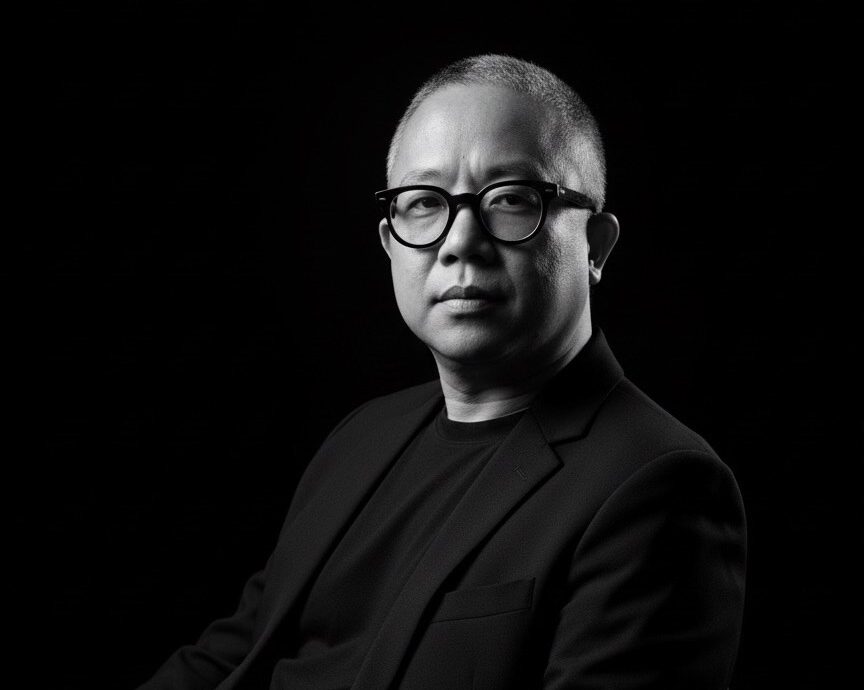
In the bustling corridors of contemporary design studios, where creativity meets commerce and tradition merges with technology, few leaders have orchestrated a transformation as profound as N. Roshan Singh. Across nearly three decades, he has fused the richness of Indian craftsmanship with cutting-edge artificial intelligence to shape what he calls “Creative Intelligence,” the union of taste, technology, and trade.
Born into a defence family, Roshan’s formative years were spent moving across India, absorbing patterns, textiles, colours, and storytelling traditions from place to place. Those lived experiences became his first design school, instilling in him the belief that design carries memory, meaning, and dignity.
“As I travelled, the intricate motifs, rich textiles, and living craft cultures I encountered shaped my creative trajectory,” Roshan reflects. “That immersion didn’t just ignite my passion, it convinced me that design can hold memory, meaning, and dignity.”
This foundation now powers a career that bridges the artisanal and the algorithmic, the handcrafted and the AI generated, the local and the global.
THE EVOLUTION OF A CREATIVE SYSTEM
What distinguishes Roshan’s approach from conventional design leadership is his systematic methodology to creativity. Over 28 years, he has developed what he describes as two unwavering commitments: craft with integrity letting materials speak without gimmicks and systemizing creativity so great work becomes repeatable under pressure.
His creative process remains remarkably consistent despite technological evolution: “I still run every brief like day one: study the brief in detail, listen deeply, sketch bravely, edit hard, integrate AI into the design workflow, and align with business reality. That rhythm keeps the flame bright.”
This disciplined approach has allowed him to navigate seamlessly across diverse domains from fashion to interiors to lifestyle products while maintaining what he calls his “core grammar”: story, proportion, texture, and disciplined colour. The secret lies in his portable toolkit: modular mood systems, colour architectures, and a technique library that translates authentically across mediums.
“My core grammar story, proportion, texture, and disciplined colour stays constant. What changes is emphasis,” he explains. “In fashion, cadence and silhouette lead; at home, tactility, longevity, and ensemble harmony matter more.”
THE STRATEGIC TRANSFORMATION: FROM MAKER TO MULTIPLIER
Two pivotal moments marked Roshan’s evolution from creative execution to strategic design leadership. The first came when he began leading multi-category, P&L-aware programs, recognizing that great design only wins if it lands on time, at quality, and at the right margin. This realization shifted his focus from creating beautiful objects to designing systems and outcomes.
The second transformation occurred with the establishment of The AI Design Lab, which elevated his role from maker to multiplier. “AI let us compress exploration, align teams on one visual source of truth, and make judgment at speed repeatable,” he notes. “My work shifted to playbooks, review rituals, and coaching designing the pipeline so a whole team could ship braver, smarter collections consistently.”
This strategic shift reflects a broader understanding of contemporary creative leadership: the ability to scale creativity without compromising quality or authenticity. Roshan’s methodology involves treating design like a P&L partner, starting with a strong point of view, then stress-testing it against consumer signals, channel needs, price bands, margin targets, and capacity constraints.
CREATIVE INTELLIGENCE: THE FUSION FRAMEWORK
At the heart of Roshan’s philosophy lies Creative Intelligence, which he defines as “the fusion of taste + technology + trade.” This framework represents the ability to hold aesthetics, data, and operations in the same frame, transforming intuition into informed instinct.
“Creative Intelligence looks like: a clear narrative, disciplined colour and proportion, SKU ladders with a job for every idea (hero / volume / margin), and AI used as a co-creator to compress exploration, surface blind spots, and align teams on one visual source of truth,” he explains. “Human judgment taste, brand, ethics remains the checkpoint.”
This approach becomes particularly crucial in today’s accelerated marketplace, where speed without discernment creates noise. Creative Intelligence provides what Roshan calls “judgment at speed”work that’s beautiful and buildable, desirable and viable.
THE AI REVOLUTION: COLLABORATOR, NOT REPLACEMENT
In an industry where AI adoption ranges from fearful resistance to uncritical embrace, Roshan has positioned himself as a thoughtful advocate for AI as a creative collaborator. His approach treats AI as a disciplined team member with specific roles: exploration (fast mood and territory mapping), variation (recolours, scale, motif edits), and decision support (clean side-by-side comparisons for quick decision-making).
“I treat AI like a disciplined member of the team,” he explains. “It compresses the messy middle, aligns cross-functional teams around one visual source of truth, and lets us practice judgment at speed. But it’s not the creative director you are.”
A recent project exemplifies this philosophy in action. Working on a multi-category home program, Roshan’s team rewired the entire front half of the process with AI. They built AI mood systems for each territory, harmonized palette architectures, and previewed motif scale across multiple products. The result: fewer sample rounds, faster approvals, tighter storytelling, and a cleaner cost picture before any fabric was cut.
The transformation was profound: where teams previously debated for days, decisions were made in single reviews. The speed wasn’t just operational it brought clarity, allowing human judgment to focus on taste, brand, and ethics while AI handled exploration and variation.
BRIDGING ACADEMIA AND INDUSTRY: THE EDUCATOR’S MISSION
As a Professor of Practice, Roshan brings his industry experience directly into the classroom, addressing what he sees as critical gaps in current design education: commercial literacy, supply realism, systems thinking, and AI fluency. His teaching methodology focuses on “taste and tech together,” training designers to pair aesthetic judgment with real-world delivery.
“We teach taste and tech together. Taste + tech, side by side,” he emphasizes. “I train designers to pair aesthetic judgment with real-world delivery.”
His studio courses run concept to commerce: sharp briefs, mood systems, palette and proportion rules, AI-assisted prototyping, tech packs, merchandising logic, and clear sell-in stories. Students work with live briefs from brands, experience tight review cadences, and learn to measure success through speed-to-approval, option-count hygiene, and margin awareness.
Perhaps most importantly, he addresses the ethics of AI in design, teaching explicit lessons on provenance, credit, and originality. “If it’s pretty but off-brand, derivative, or unproducible it doesn’t ship,” he states firmly.
THE COLLABORATIVE PHILOSOPHY: CLARITY, PACE, AND RESPECT
Roshan’s extensive experience working with legacy export houses and agile startups has crystallized his understanding of meaningful collaboration. His framework centers on three pillars: clarity, pace, and respect. Successful collaborations begin with shared ambition, honest constraints, and fast feedback loops.
“Meaningful collaboration is shared ambition, honest constraints, and fast feedback,” he explains. “We work off one shared page creative, commercial, and operational so decisions are transparent and quick.”
This approach involves aligning on narrative and SKU ladders from day one, naming decision owners, setting review rituals, and maintaining momentum through weekly or fortnightly check-ins. Constraints are surfaced early capacity, cost windows, lead times—so creativity works with reality rather than against it.
MENTORSHIP AND MINDSET: SYSTEMS THINKING FOR NEXT-LEVEL CREATIVITY
When mentoring creative professionals, Roshan advocates for a fundamental mindset shift from artifact thinking to system thinking. Rather than designing individual products, he encourages designers to design the pipeline that repeatedly delivers great products under pressure.
“Don’t just design a product; design the pipeline that repeatedly delivers great products under pressure,” he advises. “Make the system kind to people and strict with quality.”
This systems approach includes shared references, colour maps, palette and proportion rules, construction grammars, critique rituals, and simple metrics everyone can read. Combined with AI as a creative partner, this methodology allows creativity to scale while maintaining quality and authenticity.
NAVIGATING CHANGE: TREND AS COMPASS, NOT SCRIPT
In Roshan’s framework, trend intelligence serves as a compass rather than a script. His approach synthesizes cultural signals, retail data, and category trajectories then translates these insights into market specific expressions through calibrated palettes, tactile refinements, motif proportions, and pricing strategies.
“Trend is a compass, not a script,” he emphasizes. “We interpret cultural and retail cues to create localized yet cohesive design directions.”
This philosophy ensures fewer, better options with faster read and react loops delivering products that are both globally resonant and true to the brand’s soul.
RECOGNITION AND LEGACY: COMPOUNDING IMPACT
Roshan has been recognized among the Top 10 Chief Creative Officers and as an Influential Business Leader, and was featured on the cover of Conglomerate Magazine’s 2025 Visionary Leaders Edition as “India’s Visionary Design Leader, Redefining the Future of Creativity with AI and Strategic Direction.” Yet he defines success not as personal acclaim, but as collective progress healthier brands, empowered teams, and playbooks that sustain results beyond his presence.
“Success, for me, is compounding impact helping brands thrive and people grow, with systems that work even when I’m not in the room,” he reflects. “Recognition is fuel, not a finish line.”
His legacy-building focuses on three areas: turning craft into commerce with integrity, systemizing creativity so leaders can repeat it under pressure, and developing better people and better systems. Through Moodboard Design Studio and The AI Design Lab, he demonstrates how taste, technology, and trade can work together to create work that’s both beautiful and buildable.
THE FUTURE VISION: CRAFT PLUS CODE DELIVERING INTIMACY AT SCALE
Looking ahead, Roshan envisions a future where craft and code deliver intimacy at scale. Consumers will shape what they buy through configurable patterns, finishes, and fits not as gimmicks, but as guided choices within brand palette and proportion systems. AI will transform merchandising into living conversations, with hero/volume/margin ladders tuned by real signals rather than guesswork.
On the operational side, AI will streamline the back end: predictive demand, tighter option counts, fewer samples, and smarter materials. Teams will prototype in hours, validate with micro-pilots, and scale only what’s beautiful and buildable.
“Done right, the next decade is judgment at speed: personal experiences, sharper innovation, and sustainable operations without losing the soul of craft,” he predicts.
THE GOLDEN INSIGHT: CULTIVATING INFORMED TASTE
When asked for his golden insight to designers navigating the AI era, Roshan’s advice is characteristically grounded yet forward-looking: “Cultivate informed taste. Master the classics. Embrace the tools. Build the system that helps your best work show up on time, every time. In the age of AI, your advantage isn’t speed alone it’s judgment at speed.”
His closing wisdom reflects the integration that defines his approach: “Remember: trend is a compass, ethics is a guardrail, and your craft is the signature. Keep those three in place, and let AI amplify not replace your voice.”
THE CONTINUING EVOLUTION
As design continues its relentless evolution, leaders like N. Roshan Singh provide essential guidance for navigating the intersection of creativity and technology. His career demonstrates that the future belongs not to those who choose between craft and code, but to those who integrate both with wisdom, ethics, and systematic excellence.
Through nearly three decades of evolution from hand drawing to CAD to AI Roshan has maintained his core commitment to honest storytelling through materials, built on discipline, taste, and respect for how things are made. His journey from the diverse landscapes of India to the forefront of AI-powered design illustrates how deep cultural roots can nourish technological innovation.
In an age where change is constant and acceleration is inevitable, Roshan Singh stands as proof that creative intelligence the thoughtful fusion of taste, technology, and trade can create work that honors the past while building the future.