
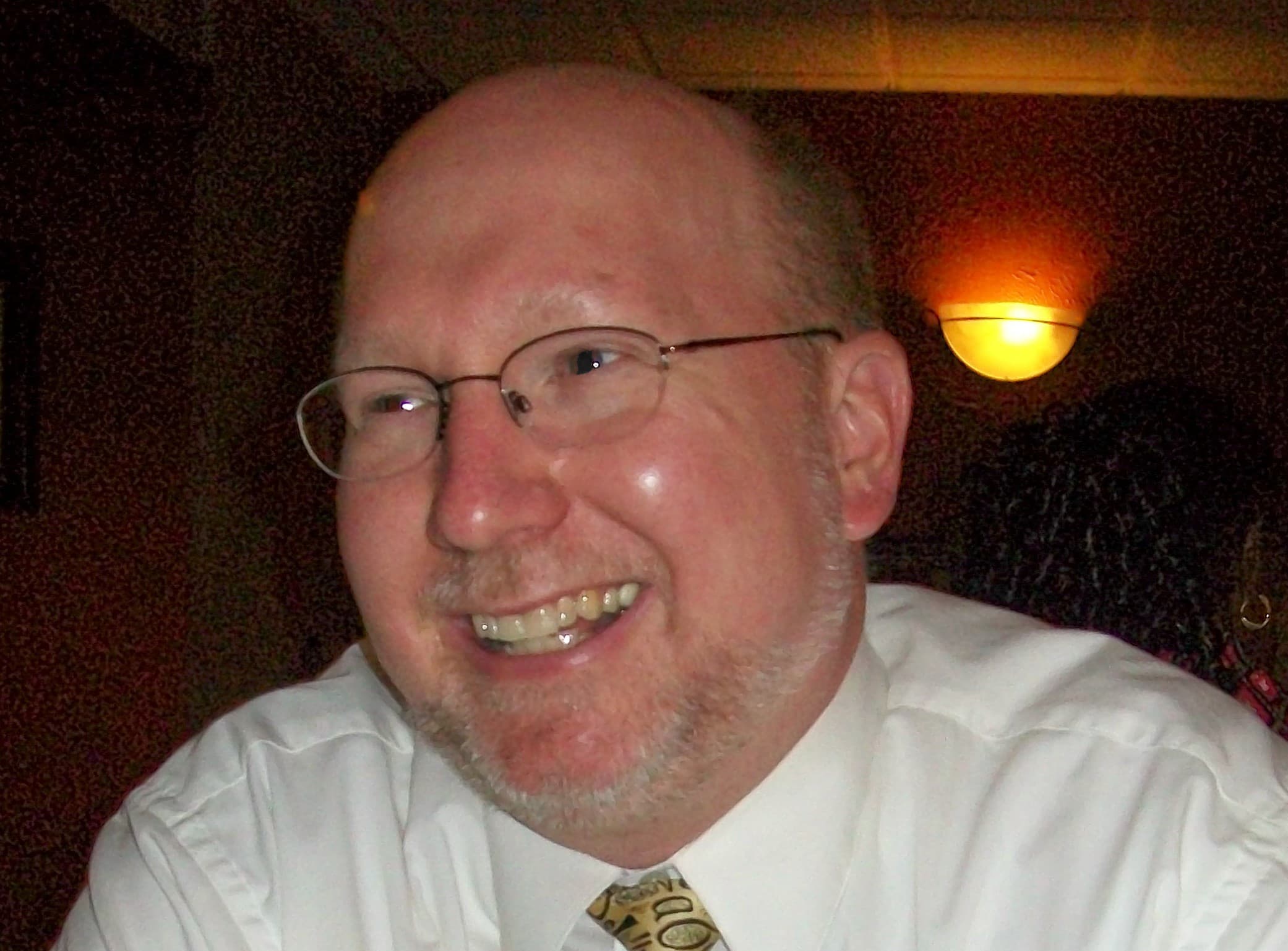
In a world racing toward artificial general intelligence, where companies pour billions into training ever-larger language models, one cognitive psychologist is asking a different question entirely. Not how can we make machines smarter, but how can we make humans and machines more creative by working together?
Dr. Tony McCaffrey stands at the intersection of cognitive psychology and artificial intelligence, but his journey began not in a laboratory or with lines of code. It began with ants. More specifically, a field called swarm intelligence. Ants solve complex problems without speaking a single word to each other.
“Ants leave chemical traces on their way back from finding food so that other ants can follow these trails,” McCaffrey explains, his voice carrying the excitement of someone who has witnessed how nature models a process that humans could imitate. “What if people did the same thing while problem solving together?”
This observation sparked the creation of BrainSwarming, a revolutionary approach to group problem solving that would eventually evolve from sticky notes on whiteboards into an AI-powered platform poised to change how humanity tackles its most pressing challenges. But McCaffrey’s vision extends far beyond a better brainstorming method. He is building nothing less than a mathematical framework for understanding creativity itself, complete with the first proof that there exists a fundamental limit to how creative any computer can be.
“Creativity is our world’s only hope,” McCaffrey states with conviction. “Given the situation of our planet, we need to invent our way out of the messes we are in. To do this, we need to understand creativity in a profound manner.”
THE SILENCE THAT SPEAKS VOLUMES
Traditional brainstorming sessions are noisy affairs. Voices compete for attention, extroverts dominate the conversation, and introverts struggle to make their ideas heard. McCaffrey saw this dynamic as fundamentally flawed.
Taking inspiration from those silent ants, he designed BrainSwarming with a radical constraint: no talking. Participants communicate solely through the traces they leave on a shared workspace, connecting relevant ideas with lines to form solutions that satisfy the desired goal. No one creates the whole solution. People add micro-contributions, which are little ideas that once connected together properly form a whole solution. They just add the little things they think of and someone else may figure out how it connects together to form a solution.
The results were immediate and surprising. In silence, more ideas are shared more quickly because everyone can contribute simultaneously. The playing field equalizes. Introverts who normally struggle to be heard contribute just as actively as their louder colleagues. The quality of thinking improves when people aren’t performing for an audience or waiting for their turn to speak. The pressure is off as no one is expected to craft a whole solution. They just add micro-contributions.
What began with physical sticky notes has evolved into an online platform where remote teams collaborate on virtual whiteboards. But McCaffrey envisions a third evolution, one that integrates artificial intelligence in two powerful ways.
First, AI can fill expertise gaps by taking on specific professional perspectives. “Suppose your mechanical engineer is missing from the BrainSwarming session. No problem. Ask AI to act like a mechanical engineer while contributing,” McCaffrey explains. This democratizes access to specialized knowledge, allowing smaller teams to punch above their weight class.
Second, and perhaps more importantly, AI will guide humans through McCaffrey’s creativity techniques to help overcome the psychological blind spots that limit human innovation. This is where his deep understanding of cognitive barriers meets the computational power of modern AI systems.
THE UNCOMMON PATH TO BREAKTHROUGH IDEAS
When McCaffrey and his spouse urgently needed a rental car in 2023, they faced a problem familiar to many travelers. None were available in their area.
McCaffrey then employed one of his own techniques: move from the specific to the generic. What is a more generic description of a car? A vehicle. Are there rental vehicles besides cars? Yes. U-Haul vans, it turned out, cost just $19.95 a day, cheaper than any rental car.
When he posed this same problem to ChatGPT in 2023, the AI suggested several conventional alternatives but completely overlooked this simple, elegant solution. Yet when McCaffrey guided ChatGPT using his technique, the system found the answer.
In 2025, ChatGPT now lists the U-Haul van solution automatically. But not because it independently discovered this creative workaround. The solution simply became popular enough on the internet that the language model absorbed it during training.
This example illustrates a fundamental truth about how current AI systems operate. “ChatGPT is a Large Language Model and is trained by learning what word most frequently follows another word in a sentence,” McCaffrey explains. “Consequently, it learns the common associations among words.”
But creativity requires something different. It demands associations that are obscure (uncommon) yet semantically close. Language models are trained on a single measure: the commonality of association. True creativity requires balancing two distinct measures to target those uncommon associations that are semantically close.
McCaffrey’s conclusion carries weight: “ChatGPT cannot solve any of the creativity problems I use whose solutions either are not on the internet or they are on the internet but not popular.”
AI systems excel at recombining existing information in many ways. But genuine creativity, the kind that produces solutions no one has ever conceived before, remains firmly in human territory.
WHEN HIGH SCHOOLERS SOLVE PROBLEMS THAT STUMP ENGINEERS
McCaffrey puts his theories to the test in the most demanding laboratory imaginable: real-world global problems. Through his Global Solutions curriculum at Eagle Hill School, he and his teen students tackle challenges that have confounded experts.
Their first target was space junk, a problem growing worse by the day. Recently, Chinese astronauts were stranded in space for nine days because debris damaged their return vehicle. The issue is urgent, complex, and has attracted significant attention from aerospace engineers worldwide.
McCaffrey’s students began by searching for obscure features of the problem. One noticed that solar sail technology had never been applied to space debris. That was the first uncommon connection. Next came a harder question: how would you attach a highly reflective plate to a dead satellite so that light or a laser beam could move it?
They looked for unusual ways to fasten things together. Someone noticed that the facehugger monster in the Alien movies has a remarkably effective attachment mechanism. Its arms wrap quickly and firmly around its target. But how could they create a mechanical device with arms that would wrap around a dead satellite?
Then came the breakthrough. A slap bracelet. The toy that wraps around your wrist on contact.
Three obscure features combined into a single original device: solar sail technology applied to space junk, the Alien monster’s attachment method, and a children’s toy’s mechanical principle.
When an aerospace engineer critiqued the group’s ideas, his response was unequivocal: “This is a fantastic concept. You should submit to NASA.” They are now in discussions with NASA about developing the concept further.
“We cannot out-engineer the engineers,” McCaffrey reflects. “But we can sometimes out-innovate them using the proper creativity tools.”
The implications are profound. Non-experts and young people can notice important obscure features of problems and combine them into workable solutions that specialists might overlook. The experts bring the technical knowledge to make solutions real, but the creative breakthroughs can come from anywhere.
THE MATHEMATICAL PROOF THAT CHANGES EVERYTHING
McCaffrey has accomplished something unprecedented in the study of creativity: he has authored the first mathematical proof establishing a limit to how creative a computer can be. The theorem itself is elegant in its logic and sobering in its implications.
A feature, McCaffrey explains, is defined as an effect of an interaction between an object and one or more other objects, forces, energies, materials, liquids, gases, weather conditions, or any other element. The US Patent Office alone holds over ten million patents. Any object can potentially interact with each of those inventions, plus the millions more from patent offices around the world.
When you include combinations of all these inventions interacting with a single object, the number of possible features becomes astronomically large, well beyond what the fastest supercomputers could process even if they started right after the Big Bang. And tomorrow there will be more inventions and patents. The day after, more still. The set keeps expanding.
“No computer or human can know everything about even a single object,” McCaffrey states simply. “This computational limit ensures that humans will always be involved in the creative process because of the unique ways that humans can sometimes create: from an intuitive pre-verbal place that finally ends up in words and symbols that machines can process.”
This is not a temporary limitation that faster processors or bigger models will overcome. It is a fundamental constraint on what computation can achieve. The feature space of any object is not just large but unknowable in its totality. There will always be interactions, contexts, and applications that no database contains and no training set captures.
For AI researchers chasing ever more capable systems, McCaffrey’s theorem offers crucial guidance. “Researchers should work toward human-computer collaboration to produce a synergy that is more creative than either humans or computers working alone,” he advises. “This collaboration will leverage the strengths of both computers and humans. Further, computers will help humans overcome their weaknesses and humans will return the favor.”
THE INVISIBLE WALLS WE BUILD AROUND OUR THINKING
Through decades of studying cognition and innovation, psychologists have identified three major psychological barriers that limit human creativity. McCaffrey has added two more obstacles to that list.
Understanding these obstacles is the first step toward overcoming them.
Functional fixedness happens when you can only see an object’s intended purpose. A brick is for building. Except it is also a doorstop, a paperweight, a weapon, a bookend. Your brain fixates on the original function and misses alternatives.
Design fixation occurs when you borrow features from solutions you have seen before. You are trying to create something new but you keep unconsciously gleaning features from what already exists. Your innovations become variations on familiar themes rather than truly original concepts.
Analogy blindness makes it hard to adapt solutions across contexts. A violin company developed techniques to reduce excess vibration, creating purer sound. A ski company adapted the same idea to make skis that vibrate less, letting skiers turn sharply at higher speeds. This connection seems obvious in hindsight. But noticing it requires ignoring superficial differences to see deep similarities.
Goal fixedness emerges from how problems get phrased. If someone says “clamp these together,” you fixate on clamps and binder clips. Change it to “fasten these together” and suddenly your mind considers other means of attachment. The language we use to describe problems constrains the solutions we can imagine.
Assumption blindness prevents you from noticing the assumptions built into your approach. Want to adhere two things together? You are unconsciously assuming two things are involved, the adherence is permanent, and the items touch directly. Become aware of those assumptions and you can bypass them. Doubting the need for permanence led to sticky notes.
Each obstacle has effective counter techniques, which McCaffrey details systematically in his book “Overcome Any Obstacle to Creativity.” But one technique stands out as particularly transformative for researchers and inventors.
THE SELF-SNUFFING CANDLE AND THE POWER OF OVERLOOKED FEATURES
Suppose your team is asked to create a new type of candle. Although any object has an astronomically large number of potential features, there are useful ways to categorize them. McCaffrey gave ChatGPT a list of fifty feature types that any object might possess: height, material, aroma, and dozens more. ChatGPT then generated a hundred common features of a candle and categorized them.
McCaffrey then asked the crucial question: which categories were not used at all, or were rarely used?
For a candle, the category of motion is rarely considered because people do not normally associate candles with movement. If you want to be innovative, you need to build upon features that are overlooked for that object. So McCaffrey thought about putting a candle in motion through its own dynamics.
He looked for another overlooked feature type. People do not normally think about a candle’s weight or, more specifically, about a candle losing weight as it burns. How can a candle losing weight cause motion?
A counterbalance scale came to mind, but there are other ways. One side of the scale rises as the candle burns. For the fun of it, place a snuffer above the candle. The result: a highly original invention, a self-snuffing candle that extinguishes itself through its own weight loss.
This technique of identifying overlooked feature categories cuts through design fixation by directing attention away from common associations from existing designs. It is a systematic method for finding the obscure but semantically relevant connections that true creativity requires.
For professionals in R&D and leadership roles, McCaffrey emphasizes that this approach transforms how teams look for highly novel solutions rather than just settling for incremental improvements to existing designs.
THE INTUITION THAT MACHINES CANNOT TOUCH
McCaffrey’s work with mathematical prodigies has revealed something profound about human creativity that no current AI system can replicate. These exceptional minds work in ways that language models fundamentally cannot emulate.
“It makes it crystal clear to me that AI cannot come up with the big original ideas I see coming from these human math prodigies,” McCaffrey reflects. “The prodigies can barely put into words what they are envisioning and usually it takes a great deal of effort to translate their intuition into diagrams, words, formulas, and equations.”
These prodigies work through intuition that does not involve language. They experience mental imagery about mathematical relationships that is fuzzy, fleeting, and incomplete. They sense patterns and connections before they can articulate them.
Large language models work with words, symbols, and completed pictures. They excel at understanding how these elements are commonly associated in human knowledge. But the big breakthroughs often happen without language and diagrams. Only with great effort do these vague intuitive insights get transformed into something that can be communicated and verified.
This is where the true synergy between human and machine intelligence emerges. Humans generate the original, intuitive insights that that are born pre-verbally. Once articulated, AI can then check whether the new idea is truly original given its extensive access to almost all documented knowledge. AI can then help deepen the connections to existing frameworks, filling gaps and strengthening arguments.
Neither can achieve alone what they can accomplish together. Human intuition provides the creative spark that breaks new ground. AI provides the computational power to verify, extend, and connect that spark to the vast landscape of existing human knowledge.
A VISION FOR CITIZEN INNOVATORS
This school year, McCaffrey and his students have applied BrainSwarming and his creativity techniques to four global problems. They have created original, plausible solutions to two of them: the space junk problem and the design of a new social media application that addresses the many ways current platforms harm users, especially younger ones.
That is a fifty percent success rate. For context, professional researchers and engineers working on these and similar problems often spend years without breakthrough solutions. McCaffrey’s students, working with structured creativity tools and collaborative methods, matched or exceeded expert performance in just months.
The lesson is unmistakable. Non-experts and young people, armed with the right creativity frameworks, can make meaningful contributions to humanity’s most pressing challenges.
“My desired legacy is that any citizen concerned about the future of our world can learn my creativity tools, assemble a group, and BrainSwarm together,” McCaffrey explains. “You and your team may very well devise a novel solution to a global problem that experts can then flesh out and make real. My students and I are doing it. You and your group can also do it.”
This democratization of innovation represents a fundamental shift in how society might approach problem solving. Rather than waiting for credentialed experts to devise solutions, concerned citizens can actively participate in creating them. The experts remain essential for implementation and refinement, but the creative breakthroughs can emerge from anywhere.
Before this vision can fully materialize, McCaffrey recognizes the need for public education about creativity and human-AI collaboration. “Both AI and humans have distinct strengths and weaknesses when it comes to creativity,” he notes. Many people falsely believe AI must be more creative than they are. Others wrongly assume they are so creative that AI cannot help them at all.
The truth lies in the productive middle ground. A proper human-AI synergy is more creative than either working alone. McCaffrey’s work provides the mathematical proof, the psychological understanding, and the practical tools to make that synergy real.
THE ONLY HOPE WE HAVE
When asked what motivates him personally to keep pushing the boundaries of what AI and human creativity can achieve together, McCaffrey’s response is direct and urgent.
“Creativity is our world’s only hope. I firmly believe that. We need a profound understanding of creativity and a practical way to craft an AI-human synergy to invent our way out of all the messes we are in.”
This is not hyperbole or marketing language. It reflects a sober assessment of global challenges and the mechanisms available to address them. Climate change, resource depletion, social fragmentation, technological disruption—these problems will not be solved by doing more of what we already know how to do. They require genuine innovation, the kind that comes from seeing problems in entirely new ways and combining ideas that have never been connected before.
McCaffrey has built the mathematical foundation proving that computers alone cannot achieve the level of creativity required. He has identified the psychological barriers that prevent humans from reaching their creative potential. He has developed practical techniques to overcome those barriers. And he has created collaborative frameworks that allow humans and AI to work together in ways that amplify their respective strengths.
The pieces are in place. What remains is implementation at scale, bringing these tools and insights to the millions of people who care about the future and want to contribute to solutions.
A LEGACY BEING WRITTEN IN REAL TIME
Dr. Tony McCaffrey’s work represents a rare convergence of theoretical rigor and practical application. He has not just theorized about creativity; he has proven mathematical theorems about its limits. He has not just studied psychological barriers; he has developed concrete techniques to overcome them. He has not just imagined human-AI collaboration; he has built platforms and curricula that make it real.
His students are already proving the model works. They are tackling problems that can stump experts. They are combining obscure features into original solutions. They are demonstrating that creativity, properly understood and systematically applied, can emerge from unexpected places.
As AI continues its rapid advance, McCaffrey’s work provides essential guidance for maintaining human agency and creativity in an increasingly automated world. His mathematical proof that computational creativity has inherent limits is not a pessimistic statement about technology. It is an empowering recognition that humans will always have an essential role in the creative process.
The future McCaffrey envisions is not one where AI replaces human creativity or where humans stubbornly resist AI assistance. It is a future where both work together in a carefully designed synergy, each compensating for the other’s weaknesses and amplifying the other’s strengths.
BrainSwarming sessions where AI contributes expert perspectives alongside human team members. Creativity techniques that help humans surface the obscure features that AI never captured. Mathematical prodigies following fuzzy intuitions to breakthrough insights that AI then helps verify and extend. Citizens armed with creativity tools devising novel solutions to global problems.
This is not a distant vision. It is happening now, in McCaffrey’s classroom and in the growing community of practitioners applying his methods. The question is not whether human-AI creative synergy is possible. The question is how quickly we can scale it to meet the urgent challenges facing our world.
For anyone who believes creativity is our world’s only hope, Dr. Tony McCaffrey has provided the map, the tools, and the proof that the destination is reachable. The journey of a thousand innovations begins with a single obscure feature, noticed by someone who has learned to see differently.