
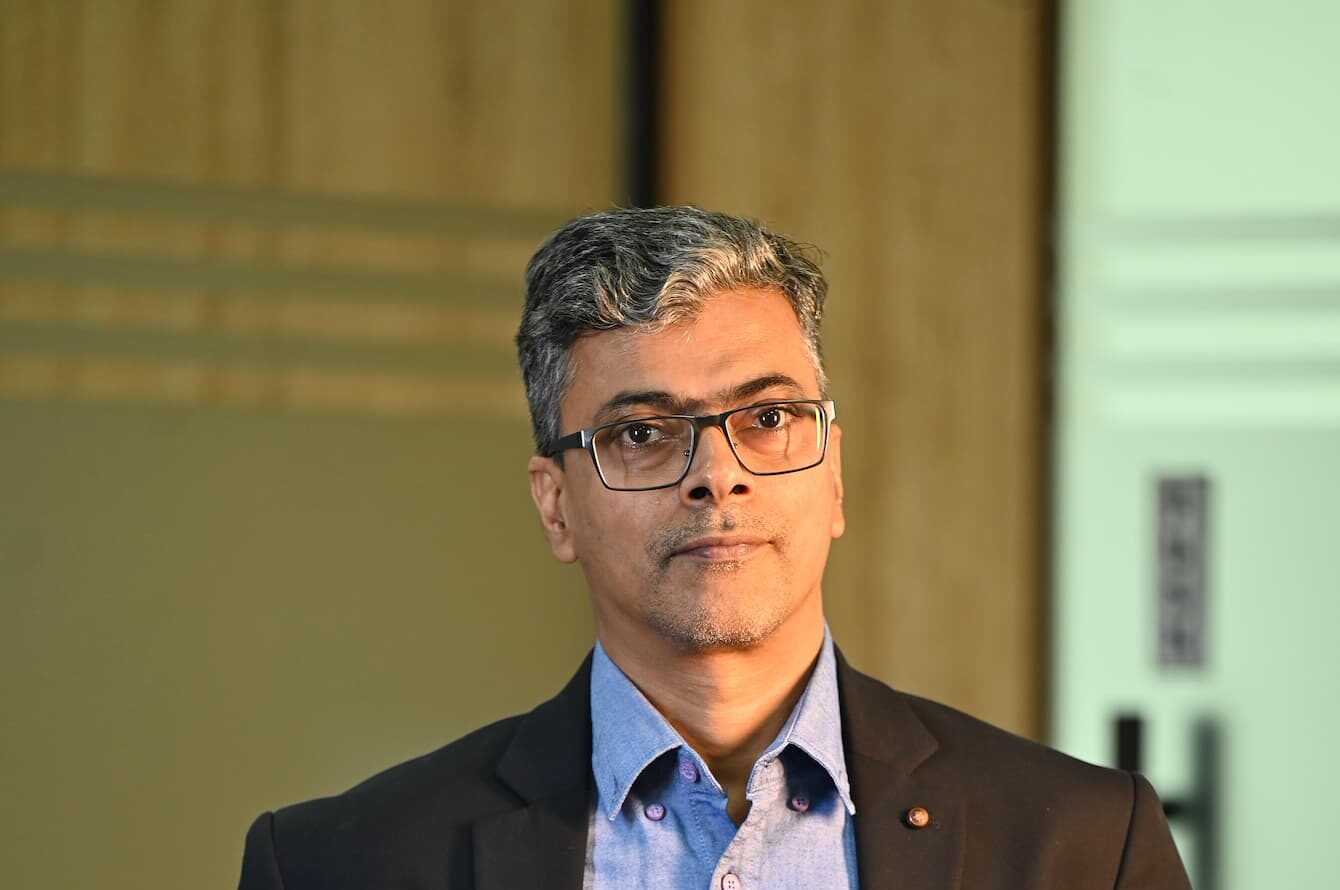
In the fast-evolving world of digital transformation, where technologies emerge and fade with dizzying speed, few leaders possess the rare combination of technical depth, strategic vision, and genuine commitment to human potential that defines truly transformative leadership. Abhijit Pal stands as a testament to what emerges when twenty-five years of cross-industry experience converges with purposeful innovation and an unwavering belief in technology’s power to democratize opportunity.
His journey through technology consulting spans continents, cultures, and sectors, creating a unique vantage point that bridges enterprise strategy with grassroots implementation. From working with large multinational advisory firms to leading innovation in India’s startup ecosystem, Abhijit has consistently championed a philosophy that places human needs at the center of every digital initiative.
The defining moment came during the first decade of the century. While incubating a mobile application development team at a large multinational advisory firm, Abhijit and his colleagues began recognizing something profound: the transformative business value of making critical processes accessible to users on the go. What seems commonplace today was genuinely bold innovation then.
“We partnered with a leading Indian fertilizer company to automate and mobile-enable their secondary sales process,” Abhijit recalls. “While such solutions are commonplace today, this was genuinely bold innovation at the time. The project’s success fundamentally shifted our perspective, demonstrating that we needed to think beyond conventional boundaries and leverage technology as a strategic differentiator to drive business outcomes.”
That revelation would become the foundation for a career dedicated to pushing boundaries while keeping people firmly in focus.
THREE PILLARS OF PURPOSE-DRIVEN INNOVATION
As a leader in India’s rapidly growing technology startup ecosystem, Abhijit has developed a distinctive framework built on three interconnected principles that distinguish sustainable growth from short-term gains.
The first pillar is human-centric digital transformation with purpose. Rather than chasing every trending technology, Abhijit focuses on sectors where social impact aligns with substantial market demand, particularly healthcare and education. “This approach democratizes access while building profitable, scalable business models that resonate with today’s purpose-driven consumers and impact investors,” he explains. It’s a philosophy that proves social mission and market success are not competing objectives but complementary forces.
The second principle centers on adaptive resilience through distributed innovation. In an era marked by geopolitical uncertainties and rapid market shifts, Abhijit builds organizational flexibility through diverse talent ecosystems, hybrid work models, diversified technology stacks, and strategic partnerships. This distributed approach ensures business continuity while positioning organizations advantageously in the evolving future of work.
The third pillar pursues sustainable growth through regenerative business models that measure success beyond financial metrics. For Abhijit, true achievement includes social impact metrics like patients reached, learning outcomes improved, and quality jobs created. “This holistic framework isn’t merely idealistic; it’s strategic positioning that attracts exceptional talent, builds customer loyalty, and creates defensible competitive advantages,” he observes.
These principles transform social mission into market differentiation, proving that purpose-driven businesses can deliver superior returns while creating meaningful impact at scale.
NAVIGATING TWO WORLDS: GOVERNMENT AND PRIVATE SECTOR STRATEGY Through extensive work across government and private sectors, Abhijit has developed sophisticated insights into how strategy must adapt to vastly different operational environments. His fundamental philosophy rejects one-size-fits-all approaches in favor of contextually designed engagement strategies.
Working on G2C projects at state and central government levels in India, Abhijit observed a disciplined, structured approach to IT implementations. Success in this environment requires meticulous scope management and dedicated focus on program execution. “For consulting and systems integration firms, this demands clear deliverable definitions and rigorous governance frameworks that serve both parties’ interests while navigating complex stakeholder landscapes,” he notes.
The private sector presents different challenges entirely. The sales cycle typically requires substantially more effort, particularly in securing board-level buy-in. Leadership teams need comprehensive ROI justifications demonstrating tangible business value before committing to technology adoption.
“My fundamental philosophy is that strategy must be individually crafted rather than generalized,” Abhijit emphasizes. “Each engagement demands thorough analysis of the client’s specific background, operational context, decision-making culture, and strategic priorities to develop truly effective approaches that drive successful outcomes.”
This adaptive intelligence, built through decades of diverse experience, enables Abhijit to navigate organizational complexity while maintaining consistent focus on outcomes that matter.
THE 2030 VISION: THREE CONVERGING FORCES
When asked about the digital transformation trends that will redefine Indian businesses by 2030, Abhijit identifies three powerful convergences already reshaping the competitive landscape.
First, AI-native operations will become ubiquitous. According to Gartner research, 100% of IT work will involve AI, with 75% being human-augmented AI collaboration and 25% fully autonomous. “This represents a paradigm shift from AI as a tool to AI as an integral workforce component, fundamentally restructuring how organizations operate and compete,” Abhijit explains.
Second, democratized intelligent automation will permeate every business function. With India’s IT spending projected to exceed $176 billion by 2026, robust investments in AI readiness and GenAI capabilities are driving unprecedented productivity gains. The World Economic Forum’s analysis highlights that AI will create 170 million jobs globally while displacing 92 million, necessitating massive reskilling initiatives that Indian businesses must proactively embrace.
Third, digital-first infrastructure will enable hyper-personalization at scale. With India’s digital economy momentum and smartphone penetration continuing to accelerate, businesses will leverage advanced analytics, IoT ecosystems, and 5G networks to deliver contextually relevant experiences. This infrastructure evolution, combined with India’s demographic advantage, positions the nation uniquely to leapfrog traditional development trajectories and establish global leadership in technology-enabled service delivery across healthcare, education, and financial inclusion domains.
ARCHITECTURE BEFORE AUTOMATION: THE FOUNDATION-FIRST PHILOSOPHY
In an industry often seduced by the latest technological trends, Abhijit maintains a disciplined perspective that prioritizes fundamentals over flash. His consulting philosophy emphasizes establishing robust business architecture as the foundational prerequisite for successful transformation.
“A well-designed business architecture strategically shapes the IT landscape, enabling an optimized portfolio of infrastructure and applications that addresses precise automation requirements, whether basic automation or hyperautomation, governed through disciplined operating models,” Abhijit explains. These integrated components collectively form comprehensive Enterprise Architecture.
When EA is executed correctly, organizations achieve cascading benefits including streamlined processes, optimized IT expenditure, and direct positive impact on profitability. This foundation-first methodology ensures transformation initiatives are built on solid fundamentals rather than technology-driven approaches that often fail to deliver sustainable value.
“My professional passion lies precisely in this strategic groundwork, ensuring organizations establish the correct architectural foundations before pursuing advanced technologies,” Abhijit reflects. “This disciplined approach distinguishes genuinely transformative initiatives from superficial technology implementations, ultimately determining long-term success and competitive advantage.”
THE TWIN CHALLENGES THAT DETERMINE SUCCESS
Throughout two and a half decades executing digital transformation across diverse sectors, geographies, and organizational cultures, Abhijit has observed two fundamental challenges that consistently emerge as critical success determinants.
The first is precise problem definition. “Achieving mutual clarity between client organizations and consulting teams on the actual business problem represents half the transformation battle,” he notes. Misalignment at this foundational stage inevitably derails even technically superior solutions.
The second challenge is sustained adoption through Organizational Change Management. Technology implementation alone guarantees nothing. Success demands leadership-driven cultural integration rather than transactional rollouts. “Leaders must champion change as an embedded organizational value, not a temporary initiative,” Abhijit emphasizes. “Unfortunately, this cultural transformation frequently receives insufficient commitment, causing promising solutions to fail during adoption phases.”
These challenges transcend industry boundaries, making problem clarity and adoption excellence universal prerequisites for meaningful digital transformation outcomes regardless of technological sophistication or implementation quality.
TRANSFORMING RESISTANCE INTO ADVOCACY
Change resistance fundamentally stems from uncertainty and perceived threat to established workflows. Abhijit’s approach centers on transforming resistance into advocacy through three interconnected strategies.
First, he establishes transparent communication frameworks where transformation rationale, expected outcomes, and individual impact are clearly articulated. “People resist what they don’t understand,” Abhijit observes. “Demystifying change through inclusive dialogue or even trainings significantly reduces anxiety and builds trust.”
Second, he implements phased adoption with quick wins. Rather than comprehensive rollouts that overwhelm organizations, Abhijit designs incremental implementations demonstrating tangible value early. These victories create momentum, converting skeptics into champions who organically influence peer adoption.
Third, he embeds capability development programs ensuring teams acquire necessary skills before new systems launch. Resistance often masks competency concerns; proactive upskilling transforms apprehension into confidence.
Critically, Abhijit positions leaders as transformation co-creators rather than mere sponsors. “When leadership visibly participates, learns alongside teams, and acknowledges challenges authentically, organizational culture shifts from compliance to commitment, making sustainable transformation achievable rather than aspirational.”
DEMOCRATIZING AI FOR STARTUPS AND SMEs
Indian startups and SMEs stand at a unique inflection point where AI democratization has transformed from aspiration to achievable reality. The World Economic Forum’s AI Playbook for India’s MSMEs provides a strategic framework emphasizing that effective AI adoption doesn’t require massive capital; it demands focused implementation aligned with specific business challenges.
Abhijit’s experience suggests three foundational principles. First, start with problem-specific AI tools rather than platform investments. “Gartner forecasts that by 2027, 50% of business decisions will be AI-augmented, but success hinges on identifying discrete use cases like customer service automation, inventory optimization, or predictive maintenance where readily available cloud-based AI services deliver immediate ROI without extensive infrastructure.”
Second, leverage India’s emerging AI infrastructure ecosystem. With India’s IT spending projected to exceed $176 billion by 2026 and robust GenAI investments accelerating, startups can access affordable compute resources, pre-trained models, and API-based services that previously required enterprise budgets. The democratization of tools like ChatGPT, industry-specific analytics platforms, and low-code AI solutions means SMEs can implement sophisticated capabilities starting at minimal monthly costs.
Third, prioritize data readiness over technology sophistication. Gartner identifies AI-ready data as among the fastest-advancing capabilities. “SMEs must focus on structured data collection, quality governance, and ethical frameworks before pursuing advanced algorithms,” Abhijit advises. “This foundation ensures sustainable scaling and positions organizations to capitalize on India’s projected $6.4 billion GenAI market by 2030 while contributing to inclusive economic growth.”
THE ENTREPRENEURIAL QUALITIES THAT MATTER
Entrepreneurial enthusiasm has surged dramatically over the past decade, with emerging generations demonstrating remarkable openness to mentorship from seasoned leaders. While specific technical competencies vary by industry and business model, Abhijit identifies certain foundational qualities that consistently distinguish successful entrepreneurs from those who struggle.
Perseverance and resilience stand paramount. The ability to navigate setbacks, pivot strategically, and maintain conviction through uncertainty separates ventures that scale from those that falter prematurely. Beyond tenacity, entrepreneurs require structured analytical thinking to dissect complex problems systematically, exceptional communication skills to articulate vision compellingly, and persuasion and negotiation capabilities to secure resources, partnerships, and customer commitments.
“Equally critical yet often underestimated is understanding fundamental financial management and regulatory compliance,” Abhijit notes. “Entrepreneurs must grasp unit economics, cash flow dynamics, and legal frameworks governing their operations. These combined attributes create the comprehensive foundation enabling entrepreneurial vision to transform into sustainable, scalable business reality.”
CAREER ADVICE FOR THE AI AGE
Throughout his career-coaching journey, Abhijit consistently emphasizes one fundamental truth: sustainable career success in the AI era demands mastering capabilities that complement rather than compete with artificial intelligence. The World Economic Forum’s Future of Jobs Report 2025 reveals that 39% of workers’ core skills will transform by 2030, with 63% of Indian professionals requiring substantial reskilling. This represents unprecedented disruption but also extraordinary opportunity.
“My primary advice centers on cultivating hybrid competencies by combining deep technical literacy with distinctly human capabilities,” Abhijit explains. “While AI and big data skills top employer demand lists, creative thinking, analytical reasoning, resilience, and collaboration will be more critical and fundamental for the young generations.”
Gartner forecasts that by 2030, 75% of IT work will involve human-AI collaboration, making AI fluency essential. This doesn’t mean programming AI, but strategically directing, questioning, and augmenting AI outputs.
Abhijit emphasizes embracing perpetual learning as career insurance. India’s Skills Report 2025 projects AI-ready professionals will grow from 416,000 to over one million by 2026, but success requires continuous skill evolution rather than one-time certification.
“Develop contextual intelligence by understanding business problems holistically, communicating across stakeholder groups, and applying ethical judgment in ambiguous situations,” Abhijit advises. “These capabilities represent sustainable competitive advantages in an automation-dominant economy, positioning young professionals as indispensable orchestrators of technology rather than replaceable operators.”
REVOLUTIONIZING HEALTHCARE THROUGH TECHNOLOGY
Over the next decade, Health-Tech and AI will fundamentally reshape India’s healthcare delivery paradigm, transitioning from a physician-scarce, infrastructure-constrained model to an intelligent, accessible ecosystem. India’s digital health market is experiencing exponential growth, with projections indicating the sector could reach $50 billion by 2030.
This transformation addresses critical ground realities. India faces severe healthcare access disparities, with the majority of the population in rural areas served by inadequate infrastructure and specialist availability. AI-powered telemedicine is democratizing specialist consultations previously inaccessible to tier-2 and tier-3 populations, breaking geographical barriers that have long defined healthcare inequality.
“AI diagnostic tools are achieving remarkable accuracy in radiology interpretation, pathology analysis, and early disease detection, capabilities particularly transformative where medical expertise remains scarce,” Abhijit notes. Beyond expanding access, AI is revolutionizing operational efficiency within healthcare institutions through administrative automation, predictive patient flow management, and intelligent resource allocation.
Most significantly, the healthcare sector has emerged as a leader in AI adoption, demonstrating genuine value realization rather than experimental deployment. “This convergence of purpose-driven innovation and commercial viability positions India uniquely to develop healthcare solutions scalable across emerging markets globally,” Abhijit observes. “We’re not just solving domestic challenges; we’re establishing leadership in accessible, technology-enabled care delivery that could redefine healthcare for billions worldwide.”
THE BREAKTHROUGHS THAT WILL TRANSFORM EDUCATION
Having observed India’s education landscape evolve over decades, Abhijit believes breakthrough innovations, catalyzed by the National Education Policy 2020’s progressive framework, will fundamentally reimagine learning delivery as a cornerstone of EdTech priorities in the years to come.
Context-intelligent tutoring ecosystems represent the first transformation. These systems understand learning psychology, not just delivering content, but recognizing when students struggle conceptually versus practically, adjusting pedagogical approaches dynamically. This addresses India’s chronic teacher shortage by augmenting human instruction, enabling the competency-based assessment models India’s education reform envisions.
Immersive experiential learning through AR-VR integration offers the second breakthrough. Virtual laboratories enable rural students to conduct physics experiments or explore historical monuments through augmented reality, democratizing experiences previously accessible only to privileged urban learners. Blended learning models combining physical classroom interaction with digital immersion create engagement impossible through traditional methods alone.
Linguistic inclusivity at scale enables multilingual education delivery across India’s diverse population. Voice-based AI systems delivering education across 18+ regional languages, combined with culturally contextualized content, unlock potential in populations historically excluded from premium learning opportunities.
“Outcome-oriented skill validation systems bridge education and employability,” Abhijit explains. “As workforce requirements transform rapidly, verified micro-credentials create pathways for continuous learning, shifting focus from degree completion to demonstrated capability, addressing the persistent mismatch between academic achievement and marketplace readiness that has long challenged Indian education.”
BALANCING SILICON AND SOUL: THE LEADERSHIP PHILOSOPHY
Effective leadership in the digital age demands recognizing a fundamental truth: sustainable competitive advantage lies not in wholesale technology adoption, but in strategic orchestration of human and artificial intelligence. While AI will undoubtedly automate routine operational tasks, the enduring differentiator remains distinctly human, including contextual judgment, ethical reasoning, and innovative vision that machines cannot replicate.
“Forward-thinking leaders must understand this duality,” Abhijit emphasizes. “They will have to strategically delegate process-driven, repetitive work to AI systems while reserving complex decision-making, creative problem-solving, and governance for human expertise. This isn’t resistance to technology; it’s intelligent integration recognizing where each excels.”
The leadership imperative extends beyond implementation to capability building. Organizations must invest in comprehensive AI literacy programs, enabling teams to leverage these tools effectively rather than viewing them as threats. Success requires identifying opportunities where AI enhances productivity and cost-efficiency while simultaneously strengthening human capabilities in areas demanding empathy, creativity, and strategic insight.
“Ultimately, businesses that thrive will be those led by individuals who masterfully balance technological efficiency with irreplaceable human judgment, creating hybrid operating models where technology amplifies rather than replaces human potential,” Abhijit reflects.
WHAT SEPARATES SUCCESS FROM STRUGGLE
Successful digital transformation transcends technology implementation. It demands strategic alignment across multiple organizational dimensions working in concert. The foundation begins with crystallized business clarity: precisely articulated short, mid, and long-term objectives that anchor transformation efforts in tangible outcomes rather than abstract technological ambitions. Without this clarity, initiatives inevitably drift toward tool adoption disconnected from value creation.
Innovation in business models enabled through digital capabilities must demonstrate rigorous financial viability. This explains why CFOs have emerged as pivotal stakeholders in transformation programs. “Their disciplined financial modeling, ROI validation, and investment prioritization ensure initiatives deliver measurable returns rather than speculative experiments,” Abhijit notes. “Empirical calculations grounding innovation in economic reality separate successful transformations from costly failures.”
Beyond financial discipline, transformation success hinges on interconnected enablers: leadership vision providing strategic direction and organizational conviction; customer-centric priorities ensuring solutions address genuine pain points rather than internal preferences; organizational culture embracing change rather than resisting it; robust data architectures powering intelligent decision-making; and appropriately scaled technology infrastructure.
“These elements function as an integrated ecosystem,” Abhijit explains. “Weakness in any dimension undermines the whole. Leadership vision without financial discipline yields unsustainable initiatives. Technology without cultural readiness creates adoption resistance. Customer focus without data infrastructure prevents personalization. Digital transformation succeeds only when organizations orchestrate these factors holistically, recognizing that sustainable change requires simultaneous progress across strategy, people, process, finance, and technology dimensions.”
A LEGACY OF SUBSTANCE OVER FLASH
The legacy Abhijit aspires to create centers on developing technology professionals who lead with integrity, intellectual rigor, and genuine impact rather than superficial technical credentials.
Integrity as foundation remains paramount. “In an era where shortcuts tempt at every turn, I hope to inspire professionals who uphold ethical standards, honor commitments, and build trust through consistent principled action,” Abhijit reflects. “Technology’s influence on society demands leaders whose moral compass guides their technical capabilities.”
Perpetual, purposeful learning defines sustainable careers. Abhijit emphasizes not just continuous education, but contextual learning, acquiring relevant knowledge precisely when career trajectory or business needs demand it. This strategic approach prevents random skill accumulation disconnected from value creation.
Analytical thinking and communication excellence represent his core mentorship focus for emerging professionals. “Technology problems rarely announce themselves clearly,” he observes. “The ability to dissect complexity, identify root causes, and articulate insights compellingly distinguishes exceptional contributors from mere executors.”
Problem diagnosis before solution advocacy embodies the disciplined thinking Abhijit champions relentlessly. Premature solution-seeking creates misaligned implementations addressing symptoms rather than causes. “Training professionals to invest time understanding problems deeply, questioning assumptions, exploring contexts, validating hypotheses, yields transformations that genuinely solve rather than superficially satisfy.”
Substance over terminology guides his approach. Technology jargon often obscures rather than clarifies. Abhijit encourages professionals to focus on detailed understanding of how systems function, why architectures matter, and what business outcomes emerge. Explaining concepts simply demonstrates mastery far better than vocabulary complexity.
Finally, strategic career and business planning ensures professionals navigate with intentionality. Understanding short, mid, and long-term objectives for careers and organizations enables deliberate choices rather than reactive wandering. “This perspective transforms professionals from tactical contributors to strategic architects of their own trajectories and their organizations’ futures.”
THE PATH FORWARD
Abhijit Pal represents a generation of technology leaders who understand that true transformation happens at the intersection of human potential and technological capability. His career demonstrates that lasting impact comes not from chasing every new technology trend, but from maintaining unwavering focus on solving real problems for real people.
Through his work in technology consulting, his leadership in India’s startup ecosystem, and his dedication to mentoring the next generation, Abhijit shapes a future where digital transformation serves humanity rather than the other way around. His influence extends beyond individual projects to fundamentally reshape how organizations approach change, how leaders balance innovation with integrity, and how emerging professionals prepare for careers in an AI-augmented world.
“If we can develop professionals who combine technical excellence with ethical leadership, analytical rigor with human empathy, and strategic vision with execution discipline, we will have created something far more valuable than any single technology solution,” Abhijit reflects. This statement encapsulates a career dedicated to building not just better systems, but better leaders.
As India positions itself at the forefront of global digital transformation, leaders like Abhijit provide the roadmap for sustainable, inclusive growth. His example proves that purpose and profit need not compete, that social impact and market success can reinforce each other, and that the most powerful innovations are those that expand human potential rather than replace it.
The future belongs to those who can navigate this balance with wisdom, integrity, and vision. Abhijit Pal’s journey shows us what that future looks like.
Note on Sources: This profile references insights from publicly available industry research including Gartner forecasts, World Economic Forum reports (including the AI Playbook for India’s MSMEs and Future of Jobs Report 2025), India’s Skills Report 2025, and National Education Policy 2020. These sources inform the analysis of technology trends and workforce transformation.