
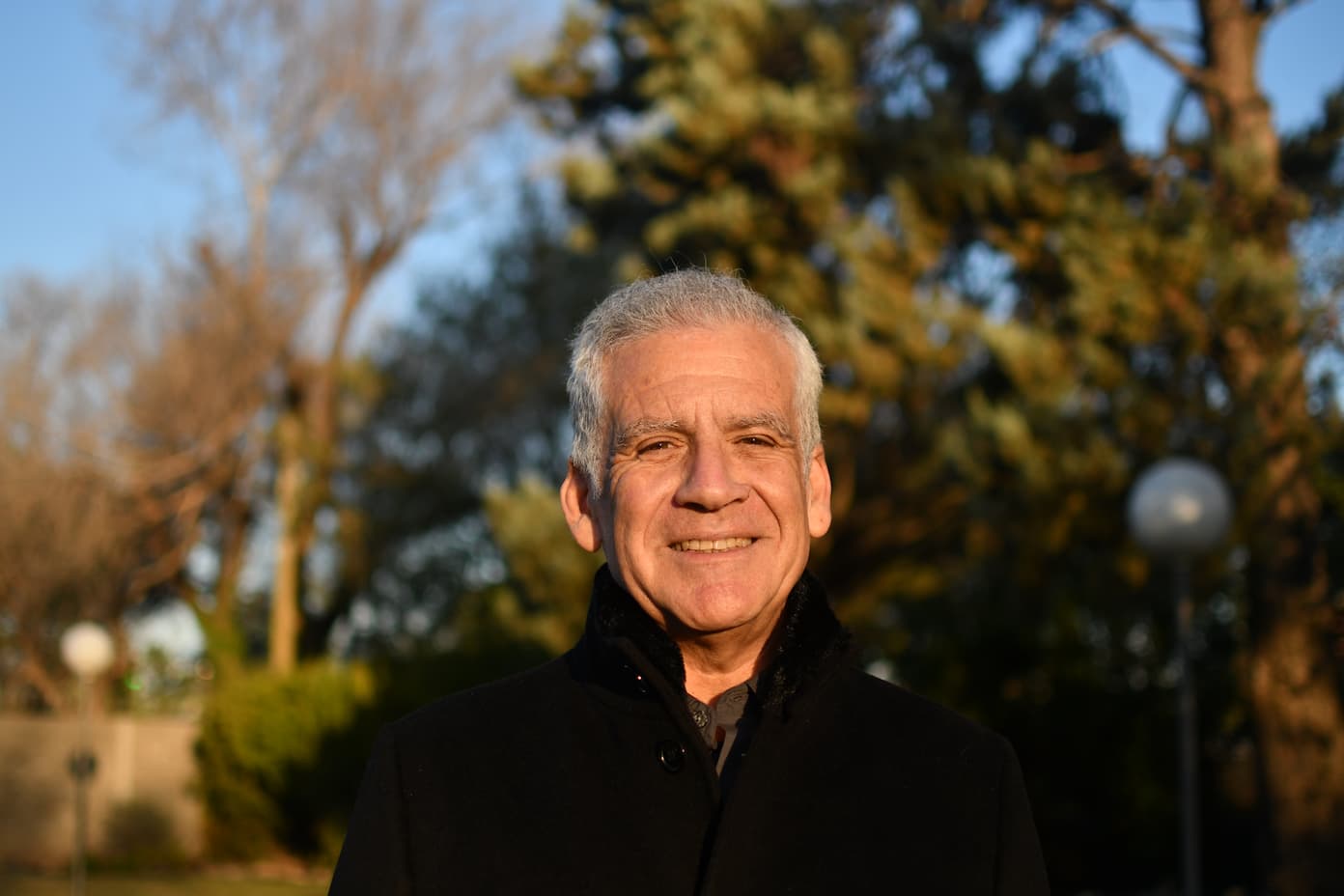
In the vast agricultural landscapes of Argentina, where traditional farming methods have dominated for generations, a quiet revolution began in 2010. At its center stands Gustavo Sosa, a biochemist whose journey from laboratory researcher to global agricultural innovator exemplifies the power of scientific curiosity combined with entrepreneurial vision. Through INBIOAR, his pioneering company, Sosa has redefined what’s possible when nature’s chemistry meets cutting-edge agricultural science.
“I was, and I still am, a scientist,” Sosa reflects on his evolution. “But to build a company, I had to learn from business and companies. I learned it in the field, not in school. The first lesson for me was, ‘I cannot do everything.’ So, I brought in excellent human beings with the know-how I needed.”
This acknowledgment of limitations became the foundation of strength. Rather than allowing scientific expertise to create isolation, Sosa’s approach fostered collaboration that would ultimately transform agricultural practices across continents.
THE DISCOVERY PLATFORM: BRIDGING LABORATORY PROMISE AND FIELD REALITY
The agricultural industry has long struggled with a fundamental challenge: promising laboratory discoveries that fail to translate into viable commercial solutions. Sosa and his Chief Scientific Officer Lucía recognized this gap and developed what would become INBIOAR’s greatest competitive advantage—a discovery platform specifically designed to bridge the chasm between laboratory potential and industrial application.
“Most plant-based chemicals work well in the lab but fail to meet industrial requirements,” Sosa explains. “Our discovery platform is a selection process that filters for the most viable compounds, ensuring that only the best chemicals reach the field.”
This systematic approach represents more than technical innovation; it embodies a philosophical shift in how agricultural solutions are developed. By prioritizing scalability and practical application from the earliest stages of research, INBIOAR has created a methodology that other organizations worldwide are now studying and adapting.
The platform’s success is evidenced by its seamless technology transfer capabilities. INBIOAR’s bio-herbicide solutions, which mimic the progressive action of glyphosate without harmful environmental side effects, demonstrate how rigorous scientific methodology can produce commercially viable alternatives to controversial synthetic chemicals.
GLOBAL BIODIVERSITY AS INNOVATION CATALYST
Sosa’s vision extends far beyond Argentina’s borders. Understanding that biodiversity represents the ultimate repository of untapped chemical solutions, INBIOAR plans to has systematically expand its research footprint across diverse ecosystems. From India’s challenging Thar Desert to Sub-Saharan Africa’s unique plant communities, and Australia’s distinctive flora, each region contributes unique molecular compounds to the company’s growing arsenal of bio-based solutions.
“We recently discovered an extract that acts like glyphosate, killing plants progressively without burning them,” Sosa reveals. “This active ingredient is being refined and will soon be presented to global companies.”
The significance of this discovery extends beyond its immediate commercial potential. It represents validation of Sosa’s core hypothesis: that nature has already evolved solutions to agricultural challenges, and the key lies in systematic discovery and intelligent application. This approach positions INBIOAR not just as a product company, but as a methodology pioneer.
Plans for expansion into Texas, USA, exemplify Sosa’s strategic thinking. Rather than simply replicating existing operations, the expansion represents an opportunity to access entirely new biodiversity resources. “The more biodiversity we can access, the more solutions we can offer to the crop protection industry,” he emphasizes.
NAVIGATING REGULATORY COMPLEXITY WITH SCIENTIFIC PRECISION
International expansion in the agricultural sector requires navigation of complex regulatory frameworks, environmental protocols, and local legislation. Sosa’s approach to these challenges demonstrates the same systematic thinking that characterizes INBIOAR’s scientific methodology.
“Our strategy begins with understanding each country’s relationship with global protocols,” Sosa explains. “This foundational step ensures that our operations are compliant and sustainable.”
This regulatory navigation capability has become increasingly crucial as environmental consciousness drives stricter agricultural regulations worldwide. INBIOAR’s proactive compliance approach, particularly with frameworks like the Nagoya Protocol, positions the company advantageously as regulatory requirements continue evolving.
The company’s collaborations with prestigious institutions, including the USDA, have created a foundation of credibility that facilitates regulatory navigation. “The patent gave us good relationships and the trust of others in us,” Sosa notes. “It created an environment of strong results that allowed us to engage with the global industry.”
REDEFINING SUCCESS: RESULTS OVER RHETORIC
Sosa’s definition of innovation success challenges industry norms that often prioritize technological sophistication over practical outcomes. His philosophy emphasizes measurable results that benefit farmers, consumers, and environmental sustainability simultaneously.
“Innovation shortens timelines and reduces costs,” says Sosa. “But the true measure of success lies in results. Farmers and the public are convinced by outcomes, not ideas.”
This results-oriented approach has enabled INBIOAR to deliver biological solutions at remarkably low costs, making sustainability accessible to agricultural operations regardless of scale. The democratization of sustainable agriculture through affordable bio-solutions represents a paradigm shift that addresses both environmental and economic concerns.
The company’s ability to provide these solutions “at a very low cost” reflects deeper operational innovations in research methodology, production processes, and distribution strategies. This cost accessibility ensures that sustainable alternatives can compete effectively with traditional synthetic solutions on economic terms, not just environmental benefits.
BUILDING GLOBAL TEAMS: TRANSCENDING GEOGRAPHIC BOUNDARIES
INBIOAR’s plans international operations across Argentina, Chile, and India demonstrate Sosa’s understanding that global innovation requires global collaboration with already known companies or scientists in each country. The company’s ability to maintain cohesive scientific goals across diverse cultural and regulatory environments reflects sophisticated organizational development.
“Our team understands each other well, irrespective of geography,” Sosa shares. “The key is working closely with international companies to identify the next problem and develop the next solution.”
This collaborative approach extends beyond internal team dynamics to encompass partnerships with international companies, research institutions, and regulatory bodies. By positioning INBIOAR as a solution partner rather than merely a product supplier, Sosa has created sustainable competitive advantages based on relationship depth and collaborative capability.
THE PHILOSOPHY OF ENVIRONMENTAL INCREMENTALISM
Sosa’s approach to environmental improvement reflects a pragmatic philosophy that values incremental progress over perfectionist paralysis. His recognition that “even small improvements in sustainability are invaluable” provides a framework for continuous advancement rather than all-or-nothing environmental strategies.
“Natural molecules, even when modified by chemistry for scalability, are better than synthetic compounds,” Sosa argues. “Every step towards reducing environmental damage is a step in the right direction.”
This philosophy enables agricultural operations to adopt sustainable practices progressively, building confidence and capability over time rather than requiring immediate comprehensive transformation. The approach acknowledges economic realities while maintaining environmental commitment, creating pathways for widespread adoption of sustainable practices.
MENTORING THE NEXT GENERATION: INNOVATION AS COLLECTIVE ENDEAVOR
Sosa’s vision for the future of agricultural innovation emphasizes collaboration between experienced practitioners and emerging talent. His advice to aspiring scientists and entrepreneurs reflects deep understanding of how innovation ecosystems develop and thrive.
“There’s immense potential in biological research and development,” Sosa counsels. “Focus on solutions that minimize environmental damage. Even small improvements in sustainability are invaluable.”
This mentoring philosophy extends beyond individual career advice to encompass systemic industry transformation. By encouraging focus on environmental benefit rather than purely commercial success, Sosa promotes a generation of innovators whose work will compound positive environmental impact over time.
“Innovation is a collective effort,” he concludes. “By combining the best ideas from young scientists and seasoned experts, we can create solutions that redefine agriculture.”
FUTURE VISION: GLOBAL NETWORK OF BIODIVERSITY INNOVATION
Sosa’s strategic vision for the next decade envisions a network of INBIOAR operations across diverse global ecosystems, each contributing unique solutions to worldwide crop protection challenges. This expansion represents more than geographic growth; it embodies a systematic approach to accessing and applying global biodiversity for agricultural benefit.
The planned expansion demonstrates sophisticated understanding of how biodiversity variation creates innovation opportunities. Rather than simply scaling existing solutions, each new location offers potential for discovering entirely new classes of bio-based agricultural products.
This network approach positions INBIOAR to respond dynamically to emerging agricultural challenges, climate change impacts, and evolving regulatory requirements across different regions. The distributed innovation model creates resilience while maximizing discovery potential.
THE LEGACY OF PRACTICAL ENVIRONMENTALISM
Gustavo Sosa’s leadership of INBIOAR represents a distinctive approach to environmental entrepreneurship that prioritizes practical solutions over ideological purity. His journey from biochemist to global agricultural innovator demonstrates how scientific rigor, collaborative leadership, and pragmatic environmentalism can create sustainable competitive advantages while addressing critical global challenges.
The company’s success in creating affordable, effective alternatives to synthetic agricultural chemicals proves that environmental responsibility and commercial success are complementary rather than competing objectives. This demonstration effect influences industry perceptions and practices far beyond INBIOAR’s direct market reach.
Through systematic biodiversity exploration, rigorous scientific methodology, and collaborative international development, Sosa has created a model for agricultural innovation that other organizations worldwide are studying and adapting. His influence extends beyond immediate commercial success to shape how the industry approaches environmental challenges and innovation opportunities.
CULTIVATING TOMORROW’S AGRICULTURAL SOLUTIONS
As global agricultural challenges intensify due to climate change, population growth, and environmental degradation, leaders like Gustavo Sosa provide essential guidance on balancing productivity requirements with environmental responsibility. His example demonstrates that sustainable agriculture requires neither compromise of economic viability nor sacrifice of technological sophistication.
The future of crop protection will be shaped by innovators who understand that nature provides the most sophisticated chemical libraries ever developed, and that systematic exploration of these resources can yield solutions superior to synthetic alternatives in both performance and environmental impact. Sosa’s career provides a roadmap for achieving this balance, demonstrating how scientific curiosity, collaborative leadership, and pragmatic environmentalism can drive meaningful global change.
Through INBIOAR’s continued expansion and innovation, Gustavo Sosa continues writing a story of how individual vision, supported by collaborative excellence and systematic methodology, can transform entire industries while contributing to global environmental sustainability.