
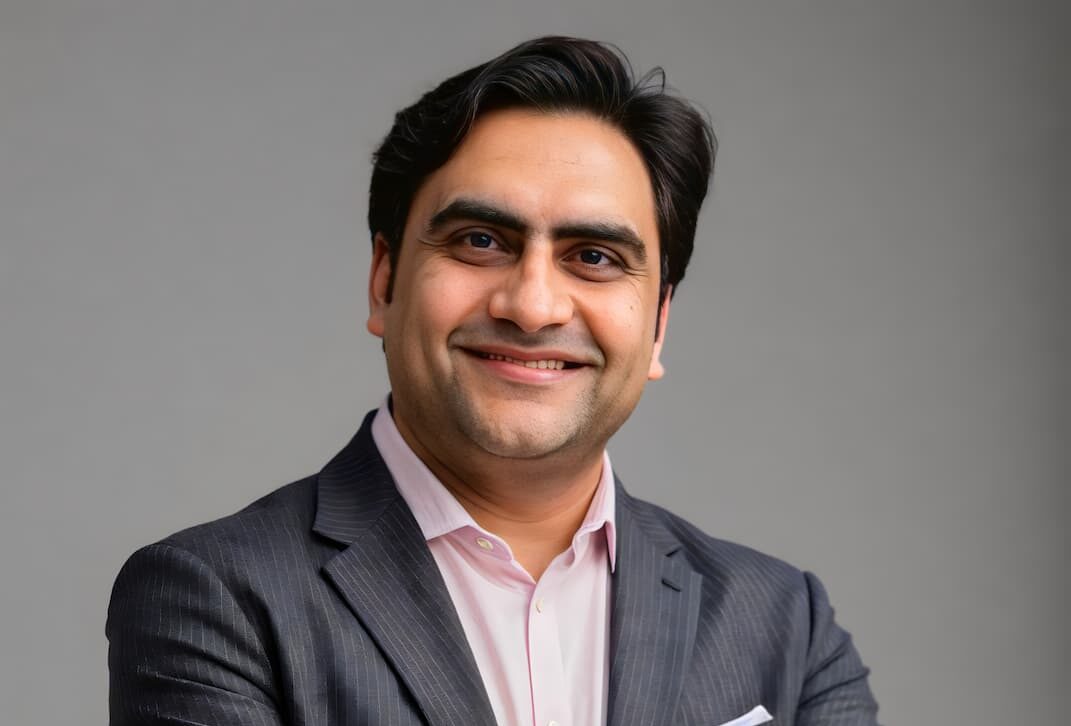
Standing before a room full of seasoned engineers at just 14 years old, teaching them IT systems, Sukh Sandhu experienced what would become the defining moment of his career. “It was an intimidating experience,” he recalls. “I stood tall physically, but internally, I was riddled with doubt.” Yet through that trial by fire, he discovered something profound: the transformative power of education and the critical importance of systems that support both learners and educators.
That teenage experience of vulnerability and triumph would eventually evolve into a mission that has reshaped how Australia approaches educational governance, compliance, and reform. As Founder of CAQA (Compliant and Quality Assured), Sandhu has built what many consider the gold standard for educational governance systems—transforming how institutions approach everything from regulatory compliance to AI integration.
From Necessity to Mission
What began as necessity has become a national movement. Sandhu’s journey from instructional designer to compliance manager to governance revolutionary wasn’t driven by ambition, but by a fundamental question that emerged from his early teaching experience: “Why weren’t systems designed to empower every learner, especially those on the fringes?”
This question led him through various roles in education, where he consistently witnessed the same pattern. “I saw good institutions struggle—not because of intent, but because of inconsistent governance, fragmented policies, and a lack of strategic clarity,” he explains. The frustration of watching well-intentioned organizations fail due to systemic issues became the catalyst for his deeper dive into governance reform.
“As I progressed from instructional designer to national compliance manager, and eventually as Founder of CAQA, I realized that sustainable reform could only happen if governance was both ethical and strategic,” Sandhu reflects. “I wasn’t satisfied with ticking boxes; I wanted to build systems that would withstand audits, adapt to change, and support learners with integrity.”
Diagnosing the Crisis in Educational Governance
From his unique vantage point working across RTOs, TAFEs, and higher education institutions, Sandhu has identified what he calls the “three core challenges” facing educational governance today—insights that have informed his revolutionary approach to institutional reform.
The first challenge is systemic misalignment. “Many institutions still operate in silos,” he observes. “Their academic boards, compliance officers, and leadership teams are often disconnected. This lack of cohesion weakens strategic planning and affects governance effectiveness.”
The second is what he terms “reactive compliance cultures”—a widespread institutional tendency to prepare for audits in panic-driven bursts rather than embedding compliance into daily operations. “This reactive mindset not only undermines quality but also breeds anxiety among staff,” he notes.
The third challenge is perhaps the most urgent: digital readiness. “With the rise of AI, remote delivery, and cybersecurity threats, governance structures have not evolved fast enough,” Sandhu explains. “Many providers are still relying on policies that were written before the digital learning boom. This creates gaps in data protection, learner engagement, and content quality.”
His solution is characteristically comprehensive: “Governance today must be agile, interdisciplinary, and future-focused if we want to remain relevant.”
Redefining the Compliance-Innovation Paradox
One of Sandhu’s most significant contributions to educational governance has been resolving what many see as an impossible tension: balancing regulatory compliance with the need for innovation. His approach challenges the conventional wisdom that compliance stifles creativity.
“Compliance and innovation are not mutually exclusive—they just operate on different wavelengths,” he argues. “Compliance gives us the framework; innovation gives us the fuel. My approach is to create systems where innovation is built on a foundation of compliance.”
This philosophy is more than theoretical. When CAQA developed AI-integrated compliance systems, Sandhu ensured they were mapped to ISO 9001 standards, ASQA guidelines, and national training packages. “This allowed innovation—like real-time audit dashboards and blockchain credentialing—to flourish without regulatory risk,” he explains.
His fundamental principle has become a mantra for educational leaders seeking to break free from the compliance-innovation paradox: “Compliance should be your launchpad, not your leash.”
Leadership Through Purpose, Partnership, and Perseverance
Sandhu’s approach to driving change across educational institutions is guided by what he calls his “three Ps”: purpose, partnership, and perseverance. These principles have shaped his methodology for institutional transformation and continue to drive CAQA’s expansion across multiple educational sectors.
Purpose serves as his North Star. “I lead because I want to build systems that help others rise,” he states. “Whether I’m consulting with a struggling RTO or advising a national body, I always ask, ‘Will this decision improve outcomes for learners and educators?’”
Partnership reflects his belief in collaborative change. “I don’t believe in top-down change. True reform happens when leaders, trainers, auditors, and even students collaborate.” This philosophy is embedded in CAQA’s structure, where every major initiative—from CAQA Digital to CAQA LLND, CAQA Systems, CAQA Labs, and their AI training framework—was co-designed with industry stakeholders.
Perseverance keeps him focused during the inevitable resistance that accompanies systemic change. “Some of my biggest breakthroughs happened after years of pushback or under immense pressure. I’ve had to challenge regulators, rebuild failing institutions, and redesign entire audit systems. Change is rarely immediate, but with grit and clarity, it is always possible.”
The ISO 9001 Revolution in Education
Sandhu’s introduction of ISO 9001 frameworks to educational governance represents one of his most transformative contributions to the sector. Rather than viewing ISO standards as additional bureaucracy, he recognized their potential to revolutionize how educational institutions approach quality and continuous improvement.
“ISO 9001 changed everything for me,” he reflects. “It shifted my mindset from inspection to prevention and improvement. Rather than simply checking whether processes exist, ISO taught me to ask: ‘Do they work? Are they effective? Are they improving?’”
This shift in perspective led to breakthrough results. In one particularly challenging case, Sandhu worked with an RTO that had repeatedly failed audits despite having robust documentation. “Their systems were fragmented,” he explains. “By mapping their operations to ISO 9001 standards—clarifying processes, roles, feedback loops, and review cycles—we not only helped them pass the next audit, but also improved their trainer retention and learner satisfaction scores.”
The success of this approach has made ISO alignment a cornerstone of all CAQA solutions. “Every solution we build is ISO-aligned, because it’s the gold standard for quality, accountability, and improvement,” Sandhu notes.
Beyond Compliance: Building Resilient Systems
Sandhu’s diagnosis of common compliance failures reveals deep insights into institutional psychology and organizational behavior. He identifies three critical pitfalls that plague educational institutions: over-documentation, under-implementation, and fear-based leadership.
“Some RTOs fall into the trap of creating mountains of policies without embedding them in practice,” he observes. “Others rely heavily on individuals—like compliance managers—without institutionalizing processes. When those individuals leave, the systems collapse.”
The cultural dimension of compliance failure is perhaps most significant. “The biggest cultural pitfall is fear. Leaders often fear audits and change, which leads to short-term fixes rather than structural improvements.”
His solution emphasizes systemic rather than personal approaches to compliance. “Build system-centered compliance, not personality-driven systems. Embed compliance in everyday operations, train teams proactively, and create dashboards that visualize compliance health in real-time. Most importantly, cultivate a culture of learning, not punishment.”
Pioneering AI Ethics in Education
As artificial intelligence transforms the educational landscape, Sandhu has positioned himself at the forefront of ethical AI implementation in educational governance. His work in this area demonstrates how technological innovation can enhance rather than compromise educational integrity.
“AI is revolutionizing instructional design by making it dynamic, personalized, and predictive,” he explains. “From adaptive learning pathways to intelligent tutoring systems, AI enables education to evolve from a one-size-fits-all model to a tailored, responsive ecosystem.”
Under his leadership, CAQA developed AI-integrated Learning Systems that automatically map learner progress, recommend support interventions, and flag non-compliance risks in real-time. More significantly, they created CAQA AI—a global framework with 12 capability levels for AI literacy across educators, leaders, and institutions.
“True transformation starts with understanding,” Sandhu emphasizes. “Every provider should conduct an AI readiness audit, establish data ethics principles, and develop human-in-the-loop models where AI enhances, but never replaces, educator judgment.”
The Ethics of Algorithmic Education
Sandhu’s approach to AI ethics in education reflects his broader philosophy of putting learner welfare at the center of all technological innovation. His framework addresses the complex ethical terrain that emerges when artificial intelligence intersects with educational governance.
“We’re dealing with data privacy, algorithmic bias, and digital equity,” he notes. “It is not enough to adopt AI for efficiency; we must interrogate how it’s built, who trains it, and whether it disadvantages any learner.”
When CAQA piloted their AI-driven assessment mapping tool, they built in multiple safeguards. “We included checks for bias, audit trails for every decision, and allowed manual overrides to ensure accountability. We also trained educators to interpret AI suggestions—not blindly accept them—because critical thinking must always govern algorithmic thinking.”
His recommendation for institutions entering the AI era is comprehensive: create an AI Ethics and Governance Charter that includes transparency clauses, equitable access policies, and learner consent protocols. “AI should never become the invisible hand—it must be the visible partner, auditable, accountable, and aligned with learner rights.”
Digital Governance for the Social Media Age
Recognizing that social media has fundamentally altered the relationship between educational institutions and their stakeholders, Sandhu has developed innovative approaches to digital governance that embrace rather than resist this transformation.
“Social media has become both a mirror and a megaphone,” he observes. “It reflects institutional culture and amplifies learner voices in ways that were once unimaginable. For governance, this means real-time scrutiny. For learners, it means access to communities, microlearning, and global dialogue.”
CAQA’s use of digital platforms exemplifies this approach. Through The VET Sector magazine and digital forums, they shape policy conversations, share best practices, and foster sector-wide improvement. “We monitor online feedback, track sentiment, and use this data to refine training resources and identify systemic risks early,” Sandhu explains.
His recommendation for institutions is to develop a comprehensive Digital Governance Strategy that includes reputation risk management, learner engagement policies, and feedback integration systems. “Institutions must monitor—not suppress—digital dialogue, and use it as a tool to strengthen transparency, accountability, and learner trust.”
Tailored Governance Across Educational Sectors
Sandhu’s experience working across RTOs, TAFEs, and higher education has given him unique insights into how governance priorities differ among educational sectors—insights that have informed his approach to developing context-specific solutions.
“Each sector is a different world, with shared goals but unique constraints,” he explains. “RTOs focus on job outcomes and compliance agility. TAFEs operate within more bureaucratic structures and must balance community service with scale. Higher education emphasizes academic freedom, research, and global rankings.”
This understanding has led to his principle of context-aware governance. “At an RTO level, I helped streamline compliance with agile dashboards. At the TAFE level, I developed integrated systems that balanced state reporting with operational flexibility. In higher education, I advised on TEQSA audits and research ethics.”
His fundamental recommendation challenges one-size-fits-all approaches: “Build governance models that are fit-for-purpose. Tailor systems around institutional mission, regulatory ecosystem, and stakeholder expectations. And always connect governance to outcomes—whether that’s employment, research, or access.”
Future-Proofing Australia’s Workforce
Sandhu’s vision for vocational training reform reflects his understanding of the fundamental shifts occurring in the global economy and workforce. His recommendations for future-proofing Australia’s educational system are both ambitious and practical.
“We urgently need modular qualifications, lifelong learning pathways, and digital micro-credentials,” he argues. “Today’s learners will change careers multiple times. Our VET system must evolve from static qualifications to stackable, skills-based credentials aligned to emerging industries.”
This vision is being realized through CAQA’s innovative programs. Through CAQA Courses and CAQA Labs, they’re building simulated learning environments and AI-enhanced training programs for industries like cybersecurity, digital health, and cloud infrastructure. “Today’s training must match tomorrow’s jobs,” Sandhu emphasizes.
His call to action for government and education providers is clear: “Co-design a Future Skills Framework, map existing qualifications to digital economy roles, and remove red tape for curriculum innovation. The future of VET is agile, industry-aligned, and driven by learner mobility.”
Transformation Through Strategic Governance
One of Sandhu’s most compelling success stories demonstrates how strategic governance can literally save institutions from failure. His work with an RTO that had failed two consecutive audits and was facing deregistration illustrates the transformative power of comprehensive governance reform.
“Morale was low, systems were broken, and their reputation was damaged,” he recalls. The rescue mission involved establishing a compliance steering committee, rebuilding all training and assessment strategies from scratch, introducing ISO-aligned quality systems, and delivering leadership development workshops to shift organizational culture.
The results were dramatic. “Within six months, they passed their re-registration audit with commendations. Within a year, their student numbers doubled, and they received industry awards.” This experience reinforced Sandhu’s conviction that “good governance is not just paperwork—it’s culture, clarity, and courage in action.”
Measuring Success Beyond Compliance
Sandhu’s approach to measuring reform success reflects his comprehensive understanding of institutional transformation. Rather than focusing solely on compliance metrics, he evaluates success through what he calls “three core dimensions: impact, integrity, and improvement.”
“For any reform to be meaningful, it must lead to tangible improvements in outcomes for learners, enhance staff capability, and strengthen the institution’s systems,” he explains. “It must also be able to withstand scrutiny—audits, stakeholder reviews, and time—while maintaining ethical and operational rigor.”
The CAQA performance dashboards monitor multiple indicators including compliance outcomes, audit performance, rectification timelines, learner success rates, satisfaction levels, staff development, and system resilience during disruption. “What truly signals long-term success for me is when an institution can continue thriving even after our direct involvement ends,” Sandhu notes.
His ultimate measure of success is cultural transformation: “The transformation from a reactive, compliance-driven culture to one that is proactive, self-assured, and compliant by design—not fear—is the most rewarding outcome.”
Building a Movement Beyond Personal Legacy
When asked about his desired legacy, Sandhu’s response reveals the depth of his commitment to systemic change rather than personal recognition. His vision extends far beyond individual achievement to encompass a fundamental transformation in how the education sector approaches governance and compliance.
“My legacy is not a building or a title—it’s a movement of fearless, ethical leadership in education,” he states. “I want to be remembered as someone who made compliance human again—who replaced fear with systems, replaced guesswork with strategy, and replaced isolation with collaboration.”
The frameworks developed at CAQA—spanning governance, AI, LLND skills, and simulated learning—are designed to serve as enduring benchmarks for integrity and innovation. But Sandhu’s ultimate focus remains on impact at the individual level: “I want learners in remote towns, new migrants, and underrepresented communities to benefit from systems I helped design.”
His definition of meaningful legacy is characteristically humble and human-centered: “If one RTO survives, one student succeeds, or one teacher feels empowered because of our work—then I have done my job. That is the legacy I am building: one that outlives audits, transcends trends, and transforms lives.”
The Continuing Revolution
Today, Sukh Sandhu continues to push the boundaries of what’s possible in educational governance through CAQA’s expanding portfolio of innovations. From AI-integrated compliance systems to blockchain credentialing, from digital governance frameworks to future skills mapping, his work represents a comprehensive reimagining of how educational institutions can thrive in an era of constant change.
His journey from that intimidated 14-year-old teaching engineers to becoming one of Australia’s most influential voices in educational governance illustrates a profound truth: sometimes the most transformative leaders are those who begin with doubt rather than certainty, who are driven by necessity rather than ambition, and who measure success by the lives they enable rather than the systems they control.
As educational institutions worldwide grapple with unprecedented challenges—from AI integration to digital transformation, from changing workforce needs to evolving regulatory landscapes—Sandhu’s work offers both a roadmap and an inspiration. His governance revolution continues to unfold, one institution, one leader, and one learner at a time.